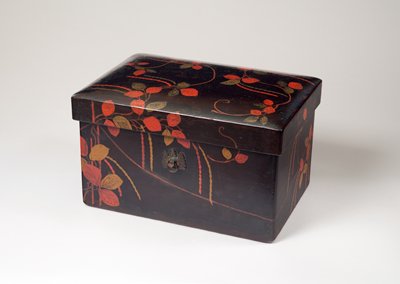
Box with sword beans
- Medium
- Negoro ware, black--lacquered wood with polychrome lacquer decorations, metal fittings
- Dimensions
- 9 5/8 x 15 1/2 x 10 7/8 in. (24.45 x 39.37 x 27.62 cm)
- Genre
- Lacquer
Tags
Japan
About
Under Chinese influence, Japanese artisans in the eighth century produced colored lacquerware by tinting the lacquer sap with mineral and vegetable pigments. As they became adept at applying gold and silver powders, however, colored lacquer fell from favor. Craftsmen in the early 17th century resurrected the technique and it became popular among warriors and well-to-do townspeople alike. Used to decorate objects intended for everyday use, colored lacquers were admired for their unpretentious charm, in contrast to laboriously produced and obviously expensive gold and silver examples. This storage box features a casually rendered string bean plant supported by bamboo stakes and straw rope--a common sight in neighborhood gardens.
![Netsuke [Dancer in Coloured Robe with Fan]](https://1.api.artsmia.org/31536.jpg)