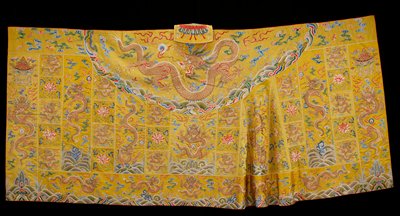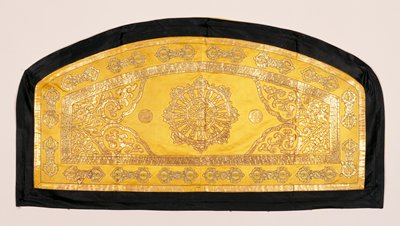
Lamaist chair back cushion cover
- Medium
- Satin and velvet with gold-leaf appliqué, needlework
- Dimensions
- L.47-1/4 x W.25 in.
- Genre
- Textiles
Tags
China
About
Textiles played a fundamental role in most Buddhist monasteries. Woven thankas and banners were suspended from pillars and beams, wool rugs covered floors and benches, silk frontals decorated most altars, and seat cushions, like this one, were placed on the chairs of senior priests. The prominent gold appliqu‚ and imperial yellow silk here suggest that this cushion belonged to a Lamaist temple under Chinese court patronage. The center displays the cakra, or wheel of the law, a common symbol for the Buddha's teaching. The border features another conventional emblem, the vajra, or thunderbolt, which symbolizes both the emptiness and illusion of the world as well as the power of enlightenment.