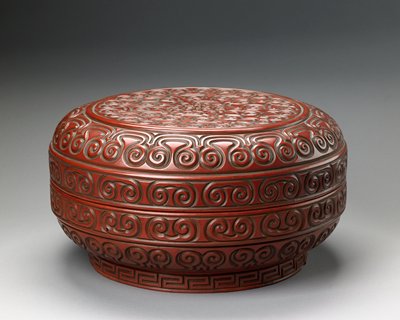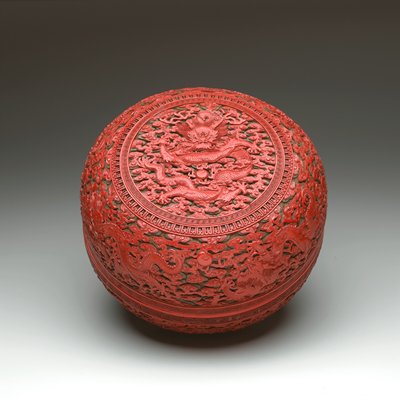
Nine Dragon Box
China
1736
- Medium
- Red, green, and brown carved lacquer (<I>tixi<I>)
- Dimensions
- 8 1/4 x 11 1/4 x 11 1/4 in. (21 x 28.6 x 28.6 cm)
- Genre
- Lacquer
Tags
China
About
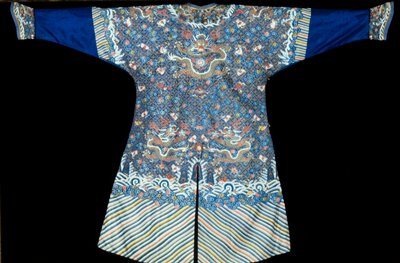
During the transitional period between the Ming and Qing dynasties (1610–1738), little or no official carved lacquer was sponsored by the court. That changed in 1739, when an official lacquer workshop was established in Suzhou, and many imperial pieces were produced from then on. Official carved lacquers of the Qianlong reign, like this one, are often distinguished by a high level of craftsmanship and a fussiness of design. This cover and box are decorated with nine five-clawed dragons in pursuit of flaming Chintamani jewels. This corresponds to the nine dragons that appear on the emperor’s imperial robes, suggesting this box was meant to be used by the emperor or imperial household. The number nine, in yin yang theory, is considered the apogee of yang: highest odd digit, masculinity, strength, power. It symbolizes the supreme sovereignty of the emperor and is often employed in palace structures and designs.