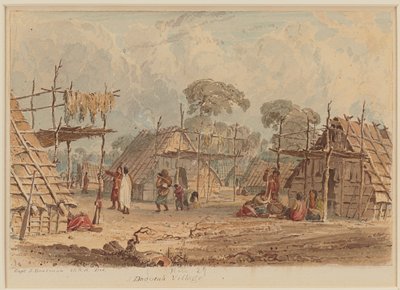
Dacotah Village
Seth Eastman
1849
- Medium
- Watercolor
- Dimensions
- 6 × 9 in. (15.2 × 22.9 cm) (image) 9 13/16 × 12 13/16 in. (24.9 × 32.5 cm) (sheet) 17 9/16 × 21 1/2 × 1 1/8 in. (44.6 × 54.6 × 2.9 cm) (outer frame)
- Genre
- Drawings
Tags
United States
About
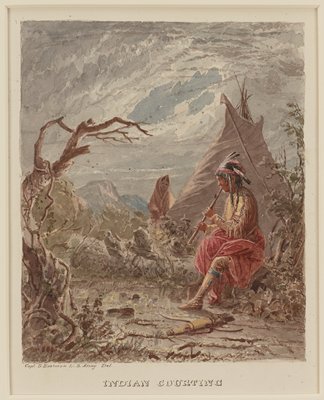
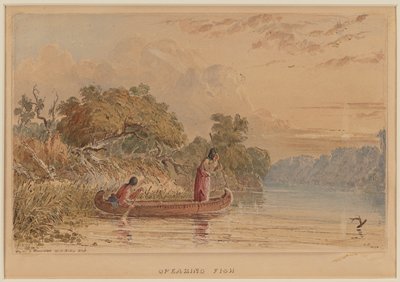
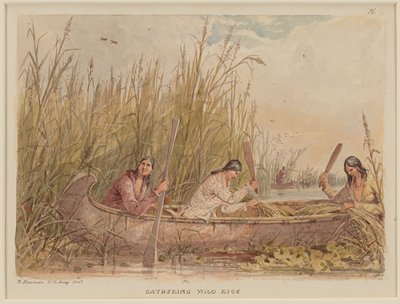
The building supplies for these elm-bark lodges came from the Minnesota River Valley. The porches allowed for a bit of shade and, up top, a handy spot to dry animal skins. Settings like this are probably what convinced Captain Eastman he needed more earth tones. A receipt for paints ordered from New York dated April 11, 1842, lists tubes of “yellow ochre, Raw Sienna, Burnt Sienna, Raw umber, …Brown Ochre, ” plus a red, blue, and blue-black. The total cost was $3.96. This watercolor, one of 35 works on paper by Eastman in Mia’s collection, was the basis for an illustration in Henry Rowe Schoolcraft’s massive Historical and Statistical Information Respecting the History, Condition, and Prospects of the Indian Tribes of the United States (Philadelphia: Lippincott, Grambo & Co., 1851-57).