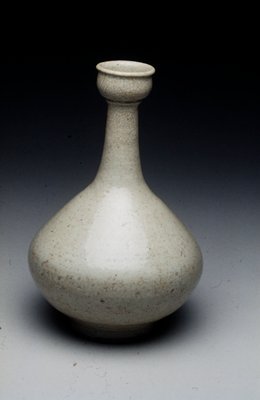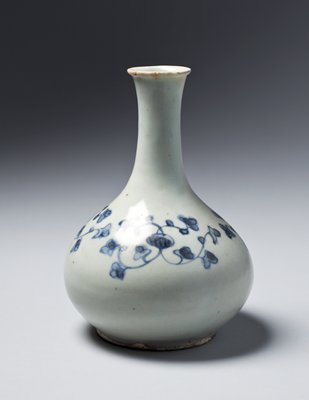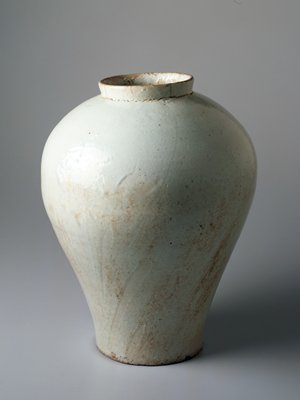
White maebyeong
- Medium
- Porcelain with clear glaze
- Dimensions
- 15 x 11 1/2 in. (38.1 x 29.21 cm)
- Genre
- Ceramics
Tags
Korea
About
From the founding of the Joseon dynasty at the end of the 14th century, Korean potters produced finely crafted, undecorated white wares which reflected the austere tastes associated with Confucianism, the official ideology of the Joseon rulers. By the 18th century, however, imperfectly formed and casually glazed vessels such as this were being produced for use by all levels of Korean society. The pleasing informality and naturalness of such objects were admired by Japanese tea masters who collected Korean ceramics in great number.