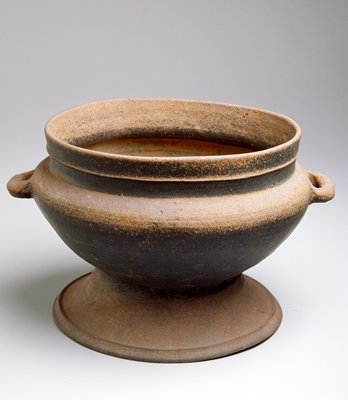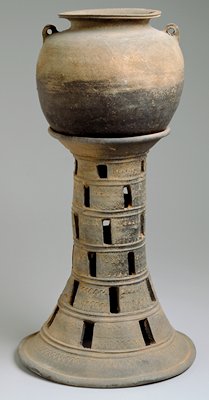
Jar with Tall, Perforated Stand
- Medium
- Earthenware with natural ash deposits
- Dimensions
- 23 3/8 x 12 3/8 in. (59.37 x 31.43 cm)
- Genre
- Ceramics
Tags
Korea
About
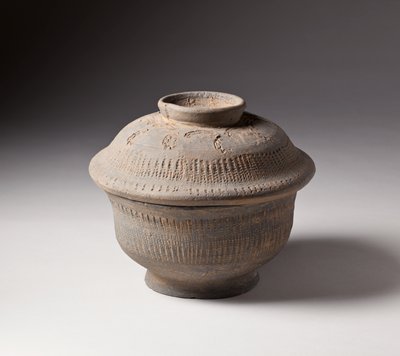
In the early 300s, Korean potters began constructing multichambered kilns in hillsides. These “climbing kilns, ” as they are now known, were capable of reaching temperatures around 2, 200˚F, which yielded highly durable stoneware. One of the most commonly produced ceramic forms was a pedestal decorated with pierced, geometric patterns and surmounted with a bowl or jar. Discovered during excavations of tombs and palaces, these vessels are believed to have been used both for utilitarian and ceremonial purposes.