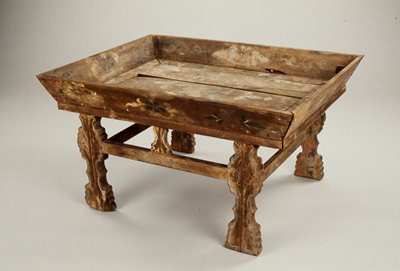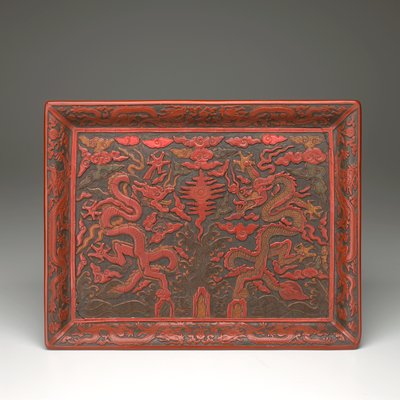
Tray
China
1550
- Medium
- Red, green, and yellow carved lacquer (ticai)
- Dimensions
- 1 11/16 x 15 15/16 x 12 1/2 in. (4.3 x 40.5 x 31.8 cm)
- Genre
- Lacquer
Tags
China
About
The lacquer foundation of this tray consists of yellow, green, and red colored layers. By carving down to varying depths the artisan was able to create a multi-color effect. Called ticai (carved colors), the technique had been available since Song (960-1279), but it wasn't until the Jiaqing reign (1522-66) that it became popular, reflecting perhaps the taste for colorful overglaze porcelain that marked this era. The interior of the tray is carved with two sinuous, five-claw dragons with horns, whiskers, and bushy tails. They confront a yin yang symbol set within a flaming shou (longevity) character. The two long sides depict two dragons in profile confronting a flaming pearl; the two short sides feature single dragons chasing the famous pearl of wisdom.