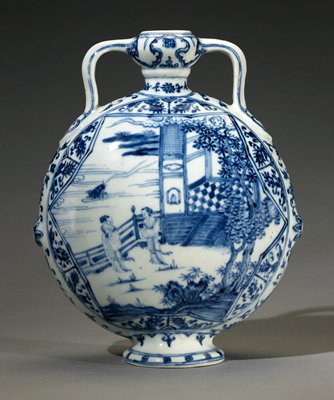
Moon flask
- Medium
- Porcelain with underglaze blue decor
- Dimensions
- 9 3/8 x 7 5/8 x 3 15/16 in. (23.81 x 19.37 x 10 cm)
- Genre
- Ceramics
Tags
China
About
Paintings were a major source for the decoration on Ming and Ch'ing porcelain. The potters at Jingdezhen, where this unusual vessel was produced, often interpreted porcelain from an earlier period freely and inventively. While the shape of this flask is drawn directly from early 15th-century porcelain prototypes, the pictorial decoration of women in a garden setting would not have been found on the earlier versions. The flattened, footed shape seen here is ultimately derived from Islamic vessels and the inclusion of the auspicious motifs of a phoenix and carp (one on each side of the flask) indicates the women were receiving good news.