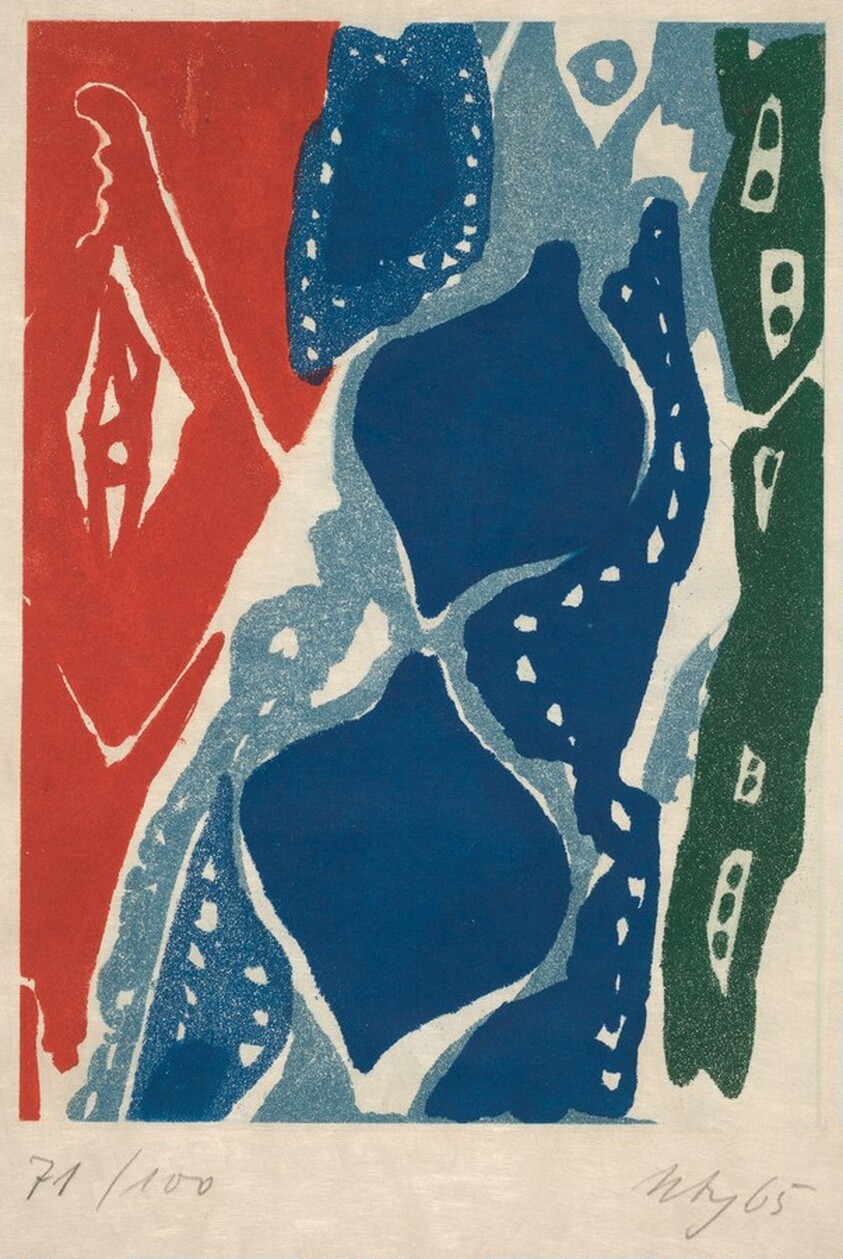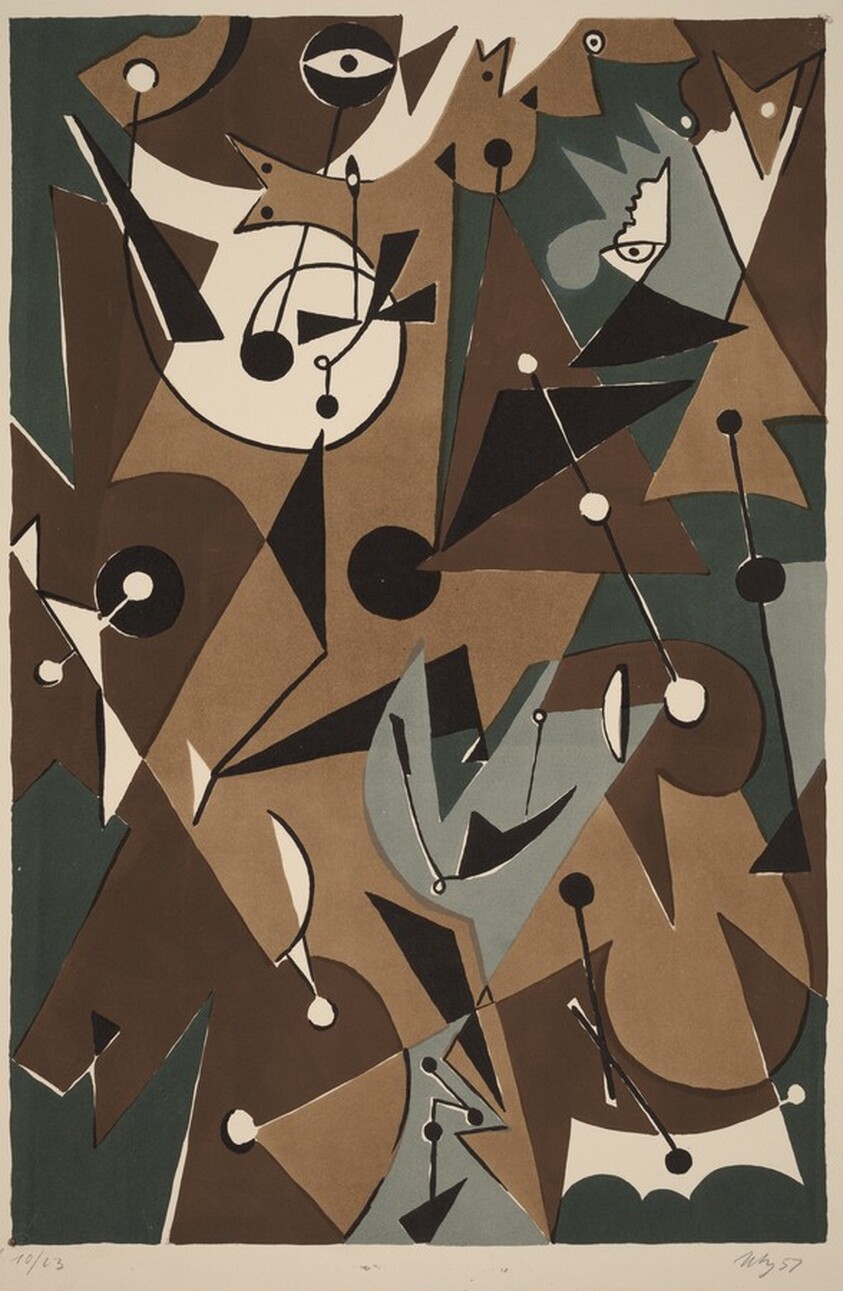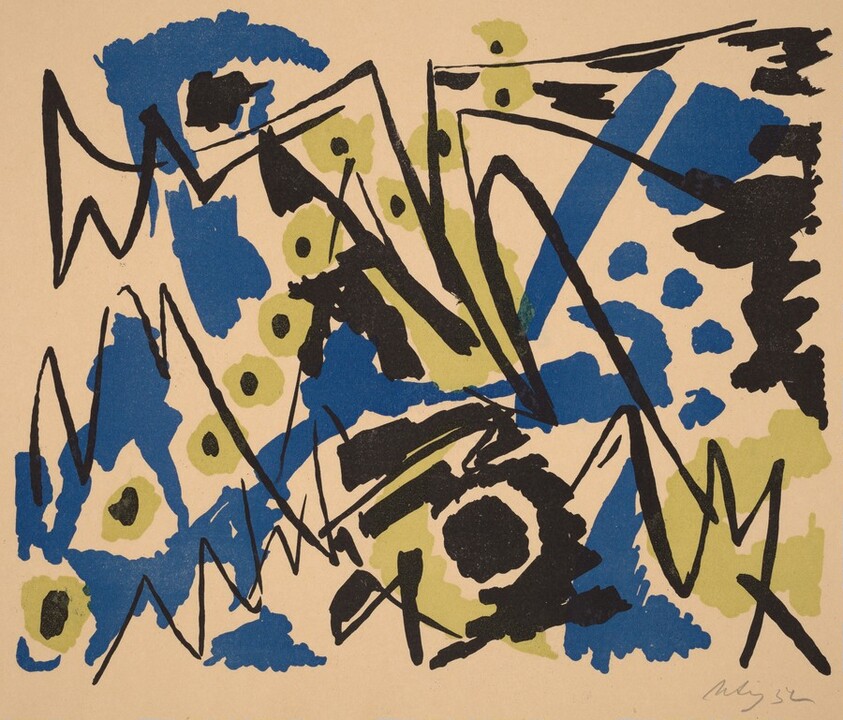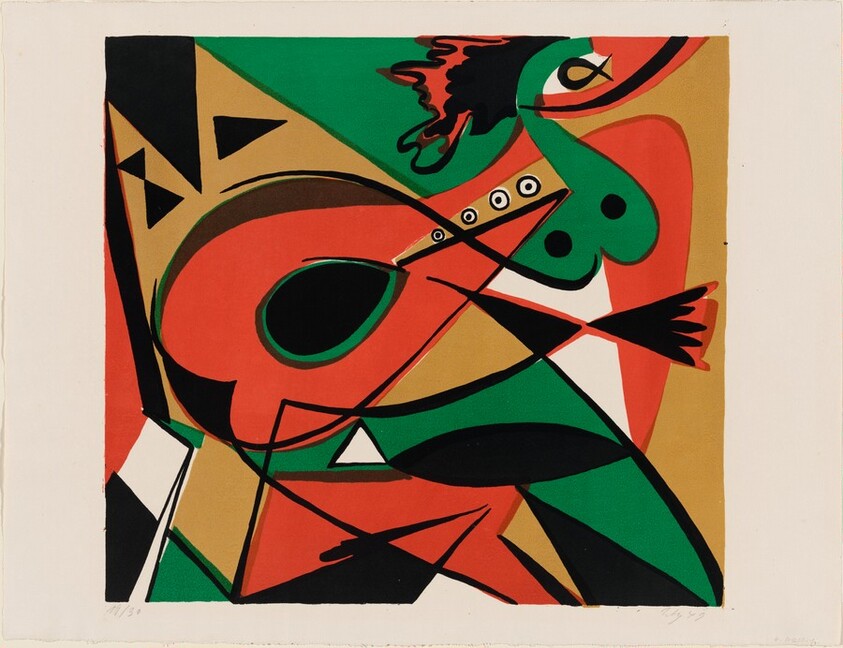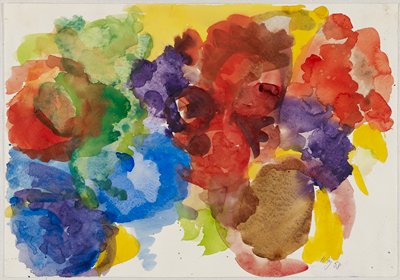
Composition
- Medium
- Watercolor on paper
- Dimensions
- 16 1/2 × 23 1/2 in. (41.91 × 59.69 cm) (sheet)
About
Ernst Nay ranks among the most famous post–World War II (1939–45) artists in Germany, yet his work is just beginning to receive serious recognition in the English-speaking world—the first English-language book about Nay appeared only in 2012. As a young man, he was a rising star among progressive artists. But when the Nazis came to power he was branded a “degenerate” artist and forbidden to exhibit. Drafted into the army, Nay continued to paint in secret in the studio of a friendly French sculptor. After the war, he and his art became symbols of a new Germany, and he represented his country in major international exhibitions. Composition reveals Nay’s interest in two French artistic trends: tachisme (painting with spontaneous dabs of color) and art informel (art that does not record existing or premeditated forms).