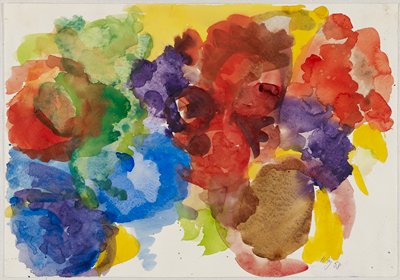
Seraphim
- Medium
- Oil on canvas
- Dimensions
- 162 x 150.7 cm (63 3/4 x 59 5/16 in.) framed: 165.5 x 154.3 x 3.9 cm (65 3/16 x 60 3/4 x 1 9/16 in.)
- Genre
- Paintings
Tags
german
About
By the late 1950s and early ’60s, abstraction dominated the artistic landscape in West Germany; it was often polemically aligned with democratic principles, in opposition to the state-imposed realism of both the Nazi era and contemporary East Germany. In 1959, at the second documenta, a major exhibition of modern and contemporary art, a large painting by Nay presided over one of two main exhibition spaces, while the work of Jackson Pollock filled the other. The so-called “American invasion” by abstract expressionists that year had a lasting effect on the development of postwar German art. Although Nay omitted all figurative references from his work in the 1950s, his series of paintings from 1963–65, dubbed “Eye Pictures,” features large circular shapes rendered in distinct color contrasts.