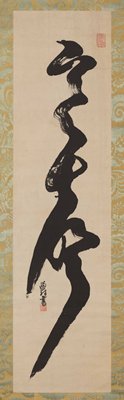
Sound of Cold Air
- Medium
- Hanging scroll, ink on paper
- Dimensions
- 49 11/16 × 12 11/16 in. (126.21 × 32.23 cm) (image) 68 7/8 × 18 1/16 in. (174.94 × 45.88 cm) (mount, without roller)
- Genre
- Calligraphy
Tags
Japan
About
Two characters, one for “cold” and another for “sound, ” appear to fuse into one in this work. The word kangoe refers to the sound of singers and monks practicing vocal exercises during cold mornings and nights to strengthen their vocal cords. The elongated form of the writing evokes the long breaths expelled from mouths, visible in cold weather. Kangoe also functions as a seasonal word in the poem and signifies late winter. Buson was a Japanese poet and Chinese-style painter, and often accompanied his paintings with poems he wrote himself. 寒聲 Sound of cold air From the poem: 寒声や古うた諷ふ誰が子ぞ Oh, sound of cold air whose child could it be who recites old songs