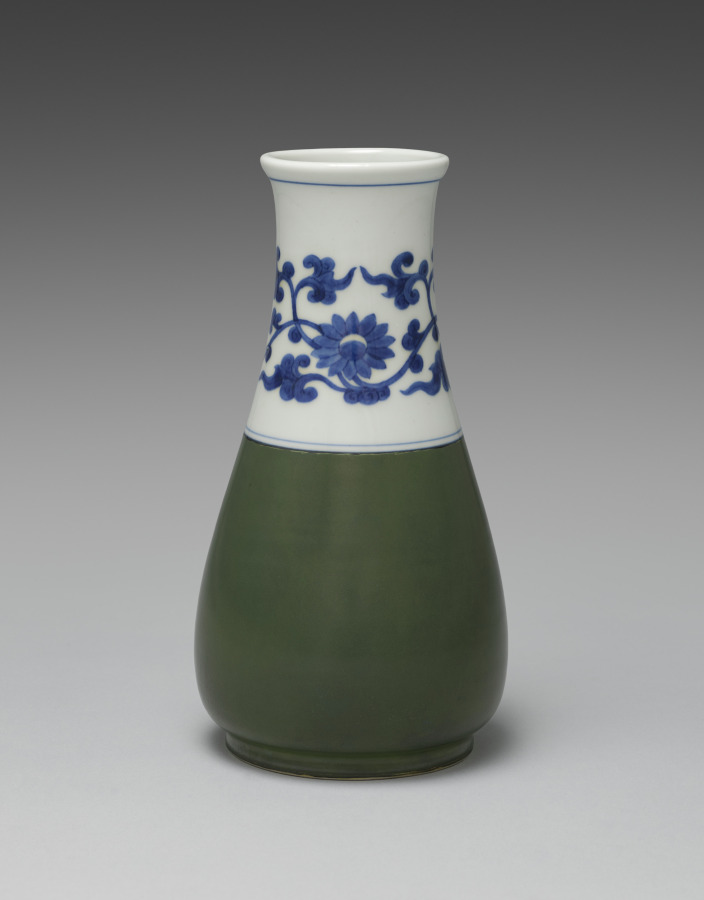
Flower Vase with Floral Scroll
Seifu Yohei III
1893–1914
- Medium
- Porcelain with underglaze colors and green glaze
- Dimensions
- 24.5 x 12 cm (9 5/8 x 4 3/4 in.)
- Genre
- Ceramics
- Museum
- Cleveland Museum of Art
Styles
Tags
Japan, Meiji period (1868–1912)
About
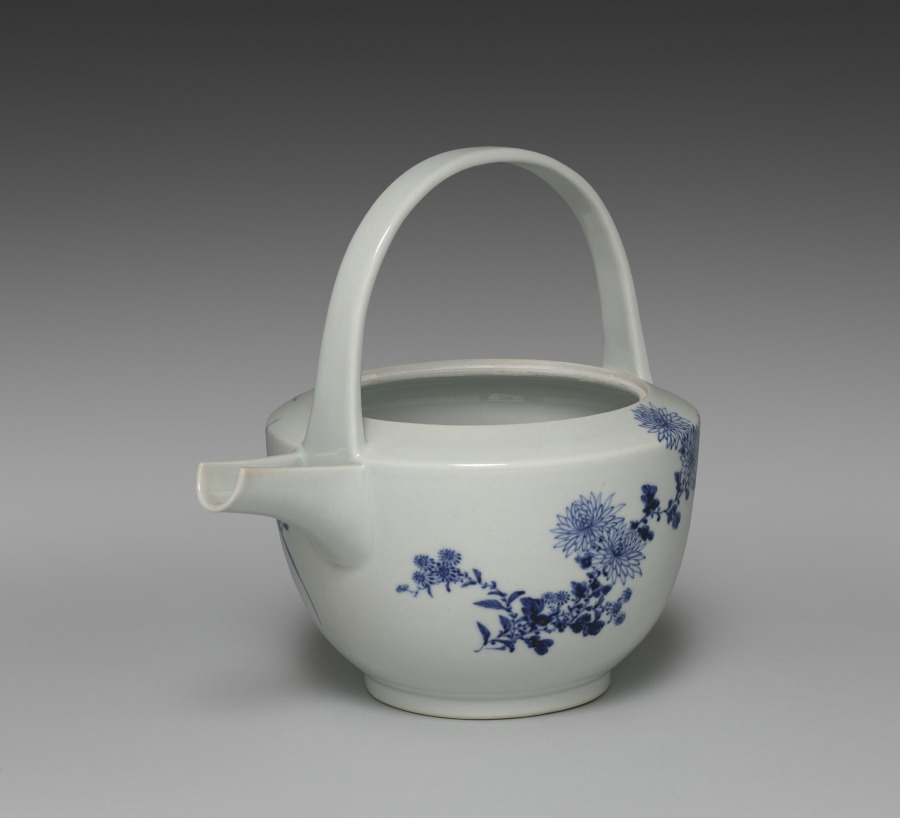
The upper part of this vase is painted in underglaze blue with a floral scroll of leaves accentuated with a single chrysanthemum motif on each face and bound at top and bottom with single blue lines. The box lid for the vase is short on detail; the inscription notes only that it is a flower vase with underglaze blue. It is possible that the box is a mismatch because the inscription does not mention the vase’s more distinctive feature: the deep green glaze on its lower half, which is seen much less frequently among Yohei III’s works. This glaze may be an example of a dark green porcelain glaze called rōkanji, which the artist invented in 1892. The name of the glaze comes from Chinese, in which it is pronounced langgan. It may literally mean “tinkling sound of jade” and could refer to malachite, among other proposed identifications.