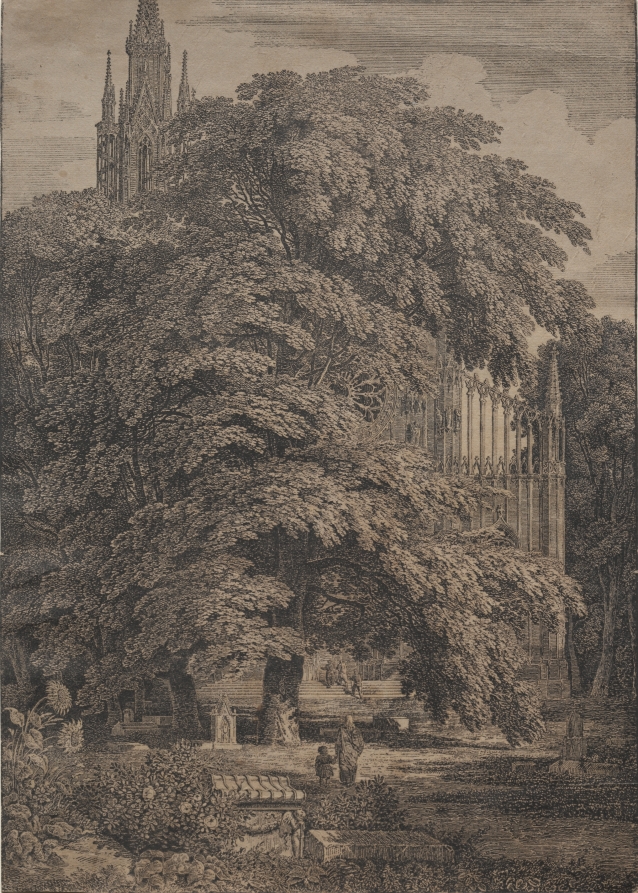
Gothic Church Behind an Oak Grove with Tombs
- Medium
- Lithograph in black ink with touches of opaque white watercolor on brown wove paper
- Dimensions
- Image/plate: 48.2 × 34.2 cm (19 × 13 1/2 in.); Sheet: 52.3 × 38.2 cm (20 5/8 × 15 1/16 in.)
- Genre
- Lithograph
- Museum
- Art Institute of Chicago
Tags
printingprintprints and drawinglithographypaper (fiber product)lithograph
About
Architect, painter, and printmaker Karl Friedrich Schinkel understood Gothic architecture as a fusion between universal Christianity and German genius. The combination here of vernacular Gothic architecture and a grand oak tree symbolizing Teutonic strength—as well as the medium of lithography itself, which had recently been invented in Munich by Alois Senefelder—infuses the print with a particularly nationalistic significance. This patriotism is all the more pointed given Germany’s military defeat at the hands of Napoleon’s army in 1806 and the subsequent occupation of Schinkel’s home of Berlin by French troops.