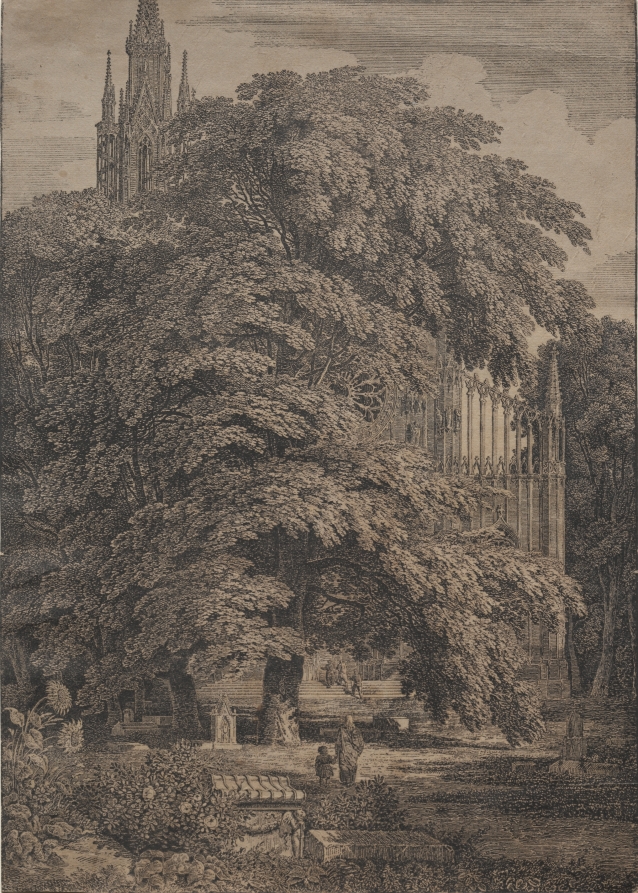
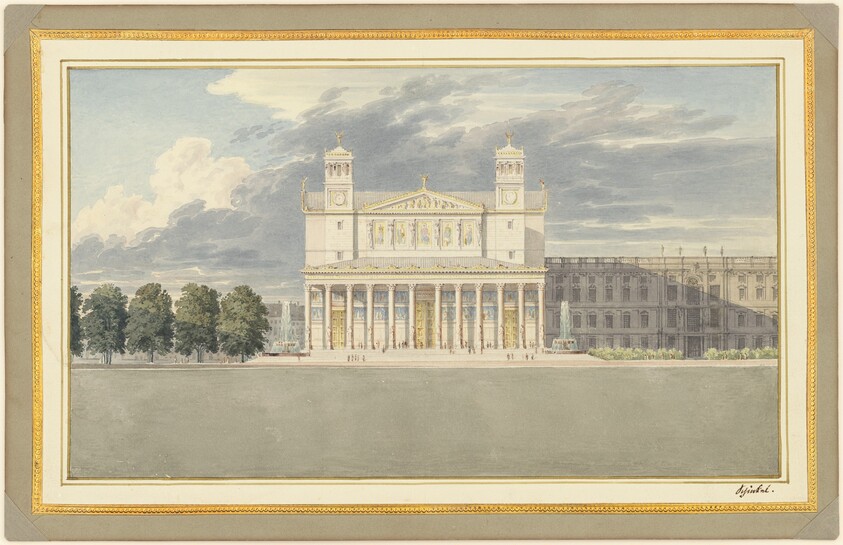
Gothic Cathedral Behind a Pond with Swans
Karl Friedrich Schinkel
1810–1815
- Medium
- Pen and brush and brown wash, with brush and brown wash and watercolor, over graphite, on cream wove paper
- Dimensions
- 24.4 × 18.5 cm (9 5/8 × 7 5/16 in.)
- Genre
- Pen and ink drawings
- Museum
- Art Institute of Chicago
Tags
drawings (visual works)paintgraphiteinkpen and ink drawingswashbrown washprints and drawingcolored inkbrown inkwatercolorpaper (fiber product)water-base paint
About
Faced with a dearth of architectural commissions in French-occupied Berlin after 1806, the architect Karl Friedrich Schinkel produced depictions of imagined architecture. Through these nostalgic concoctions Schinkel championed the Germanic Middle Ages by reviving a Gothic style of architecture over his more customary Neoclassical mode. Taking advantage of national sentiment, he found a market of buyers who longed for images of a simpler time. Schinkel’s own inscription from one of his contemporary lithographs could describe this work: an “attempt to express the lovely nostalgic sadness that fills the heart when the sound of the service emanates from the church.”