Christina Ramberg
b. 1946 — d. 1995
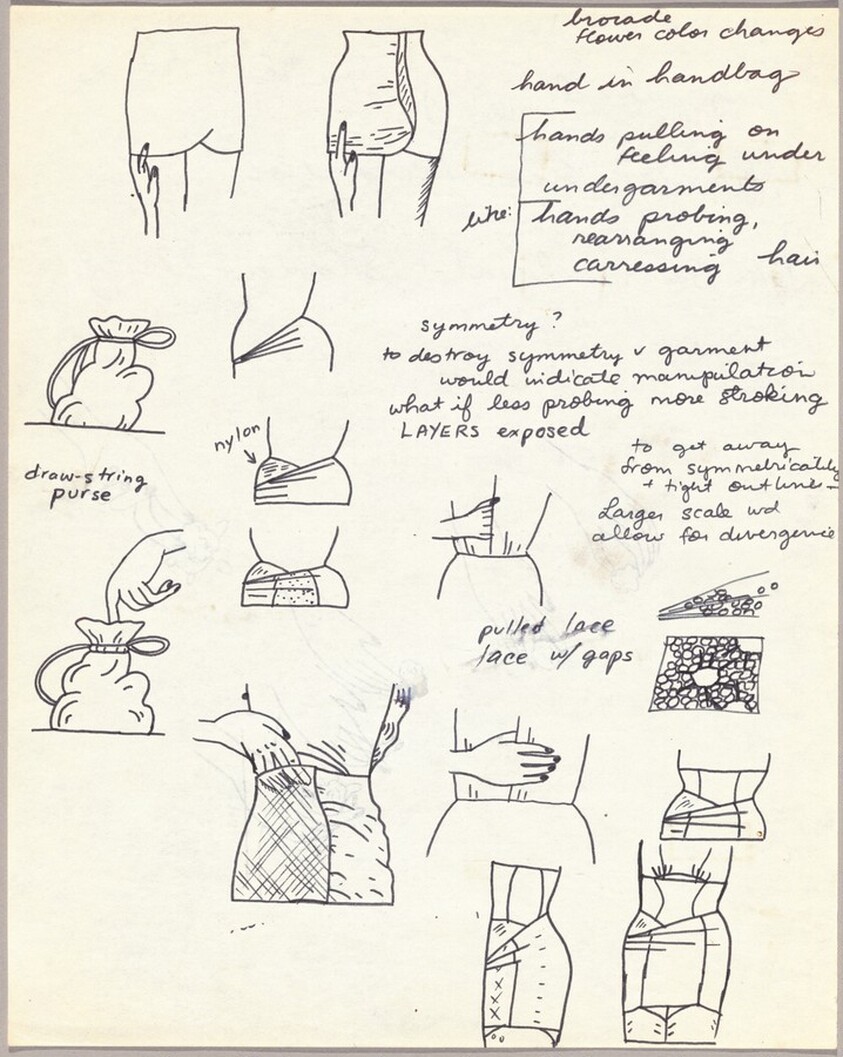
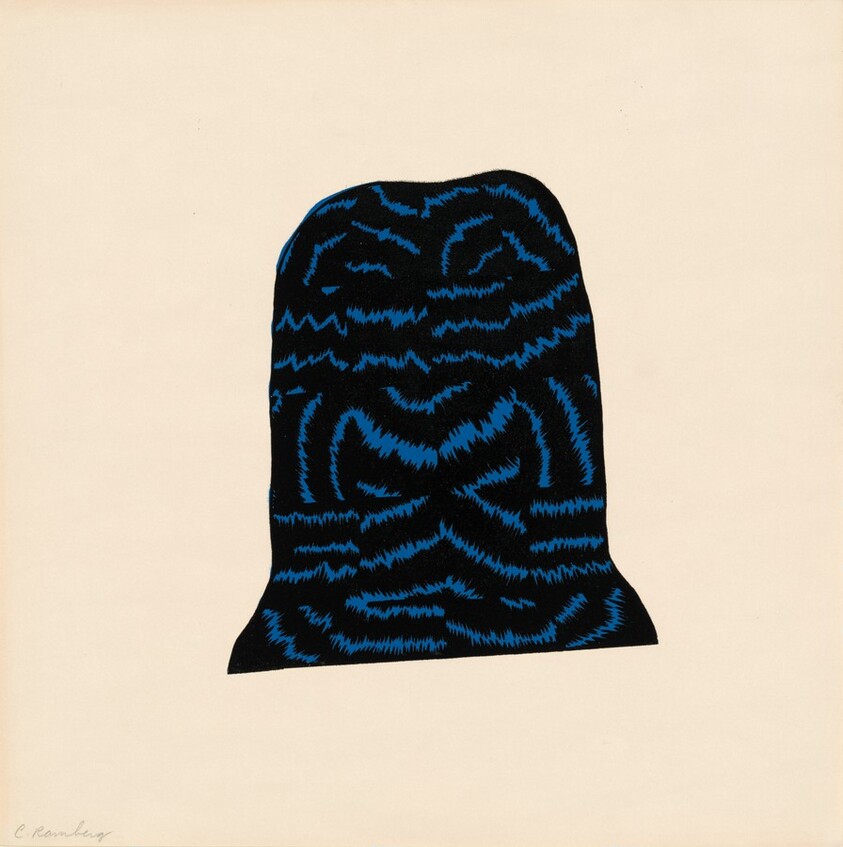
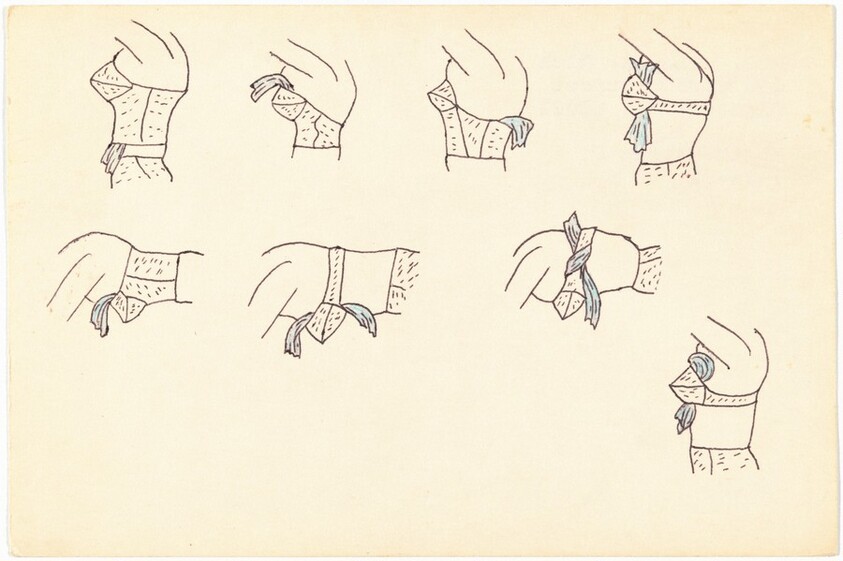
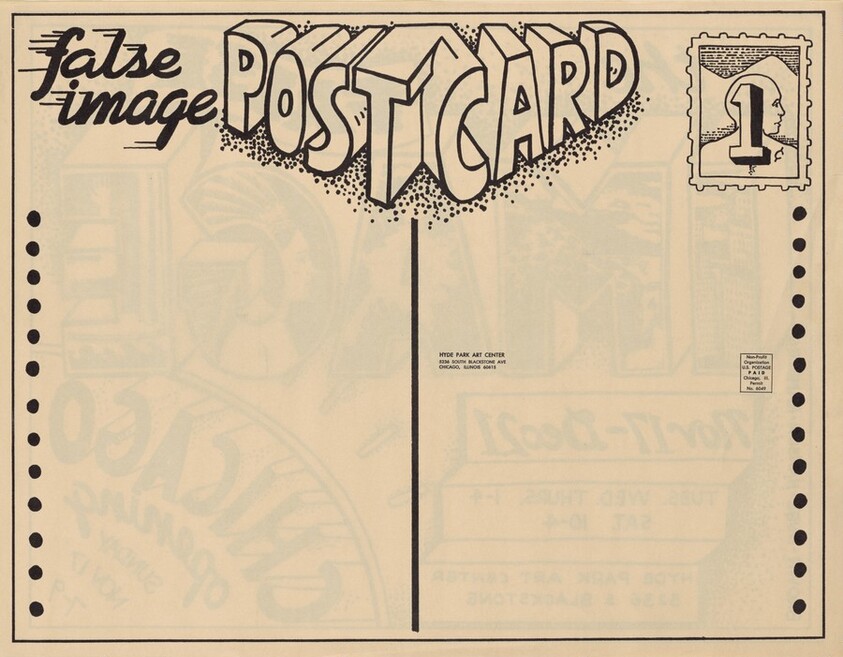
Artist Christina Ramberg is best known for her acrylic on Masonite (or board) paintings featuring stylized fragments of the female figure. In Loose Beauty, Ramberg contrasts intricately detailed intimates with the tightly cropped forms of silhouetted anatomy. Throughout her lifetime, the artist’s output was driven by her manipulation of external, patterned surfaces—such as satin and lace—and the internal structures they were draped over, stretched across, or bulging out of. Ramberg studied at the School of the Art Institute of Chicago (SAIC) where she grew close with fellow classmates Philip Hanson [https://www.artic.edu/artists/60857/philip-hanson] (whom she eventually married), Roger Brown [https://www.artic.edu/artists/33774/roger-brown], and Eleanor Dube [https://www.artic.edu/artists/105026/eleanor-dube]. Together these four friends exhibited at the Hyde Park Art Center (HPAC) on Chicago’s South Side as the False Image [https://www.artic.edu/search?q=%22false+image%22] in 1968 and 1969. Along with fellow HPAC alums who had formed the groups Hairy Who [https://www.artic.edu/artists/114577/the-hairy-who-art-green-gladys-nilsson-jim-nutt-jim-falconer-suellen-rocca-and-karl-wirsum] and Non-Plussed Some, they would soon be labeled Chicago Imagists, a movement defined by its formal clarity, stylized figuration, and references to Surrealism and popular culture. However, Ramberg’s gripping yet enigmatic aesthetic was distinct, transcending that of her Imagist peers. Whether representing figurative or abstracted forms, she methodically experimented with various approaches to shape and structure, most vividly evident in copious study drawings [https://www.artic.edu/artworks/154853/untitled]. Ramberg drew inspiration from artwork she saw in exhibitions at the Art Institute—such as Navajo (Diné) Blankets [https://www.artic.edu/exhibitions/6509/navajo-blankets-and-contemporary-navajo-rugs], Sculpture of Polynesia [https://www.artic.edu/exhibitions/5992/sculpture-of-polynesia] and Persian and Indian Miniatures [https://www.artic.edu/exhibitions/6546/persian-and-indian-miniatures-from-the-collection-of-everett-and-ann-mcnear-a-promised-gift]—as well as work she collected from self-taught artists Joseph Yoakum [https://www.artic.edu/artists/40896/joseph-yoakum] and Lee Godie [https://www.artic.edu/artists/55205/lee-godie], and “trash treasures” she collected at Chicago’s Maxwell Street Market. Ramberg participated in every major Imagist exhibition held across North and South America, as well as the United Kingdom. Concurrently, she taught at colleges and universities around Chicago, most notably SAIC, where she eventually became chair of the painting department from 1985 to 1989.
Timeline
Born 1946 — Died 1995
![Untitled (hunched women and other studies) [recto]](https://api.nga.gov/iiif/414d06f5-4452-45c2-89ce-8e4e17129455/full/843,/0/default.jpg)
![Untitled (studies of various clothing accessories) [verso]](https://api.nga.gov/iiif/fcff526d-ce61-4227-9280-b8fdf5b6517b/full/843,/0/default.jpg)