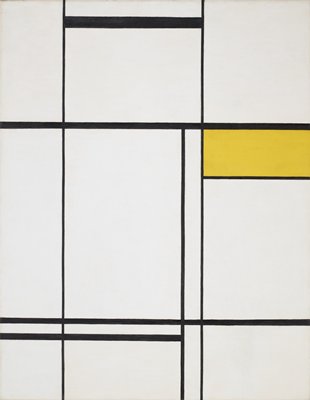
Second Theme
Burgoyne Diller
1934
- Medium
- Oil on canvas
- Dimensions
- 54 x 42 1/8 in. (137.16 x 107 cm) (image) 56 5/8 x 44 3/4 in. (143.83 x 113.67 cm) (outer frame)
- Genre
- Paintings
Tags
United States
About
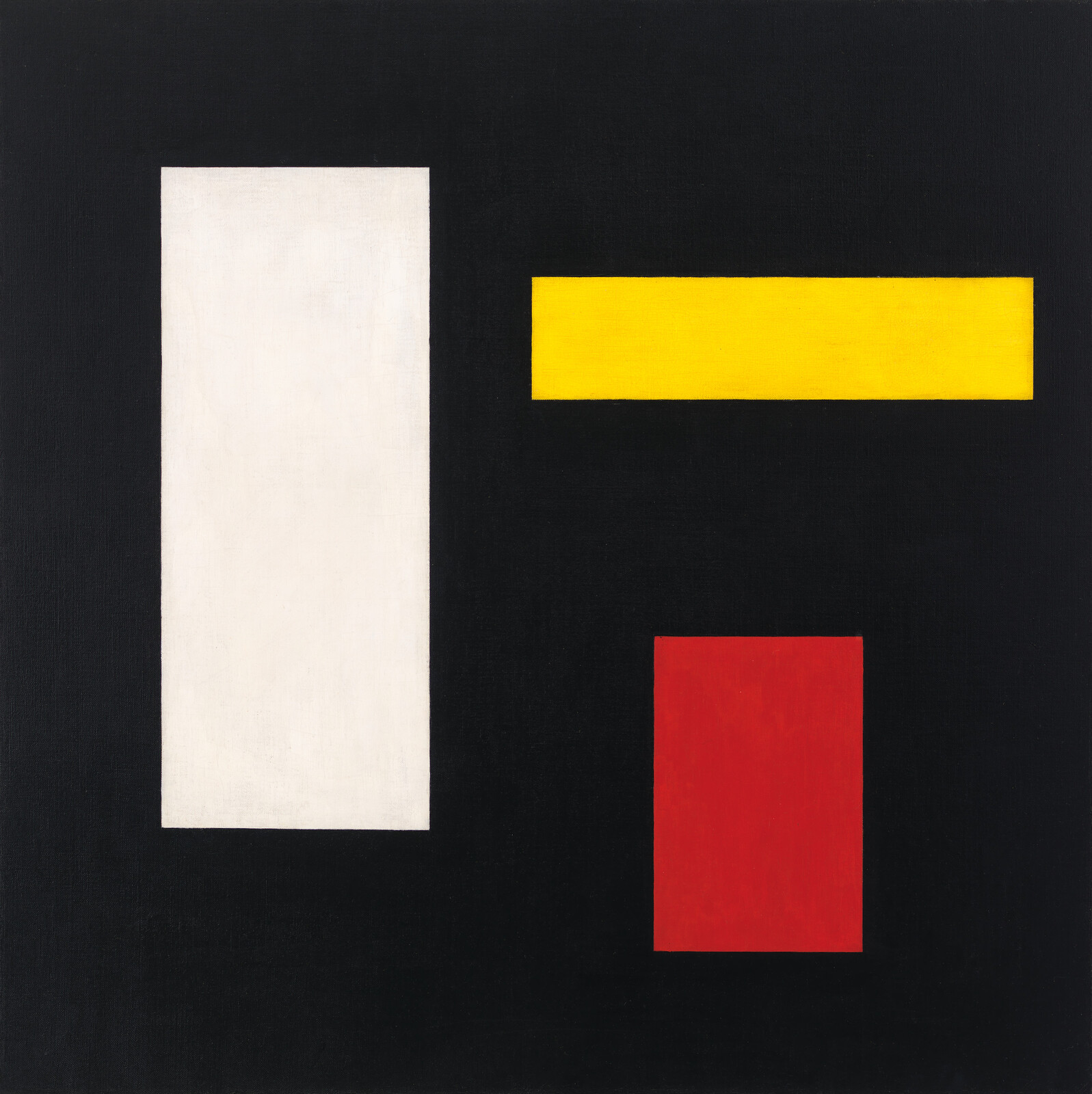
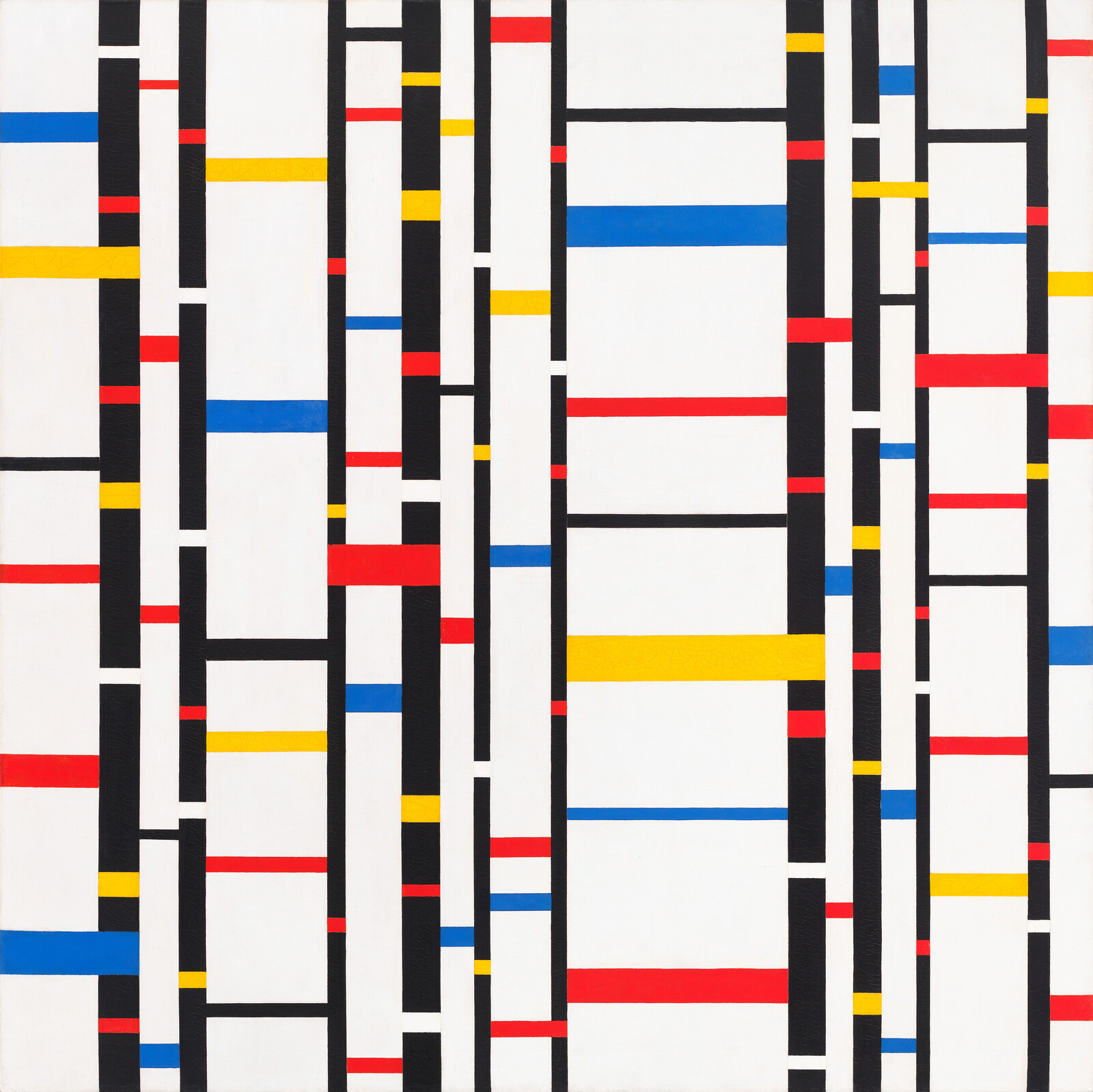
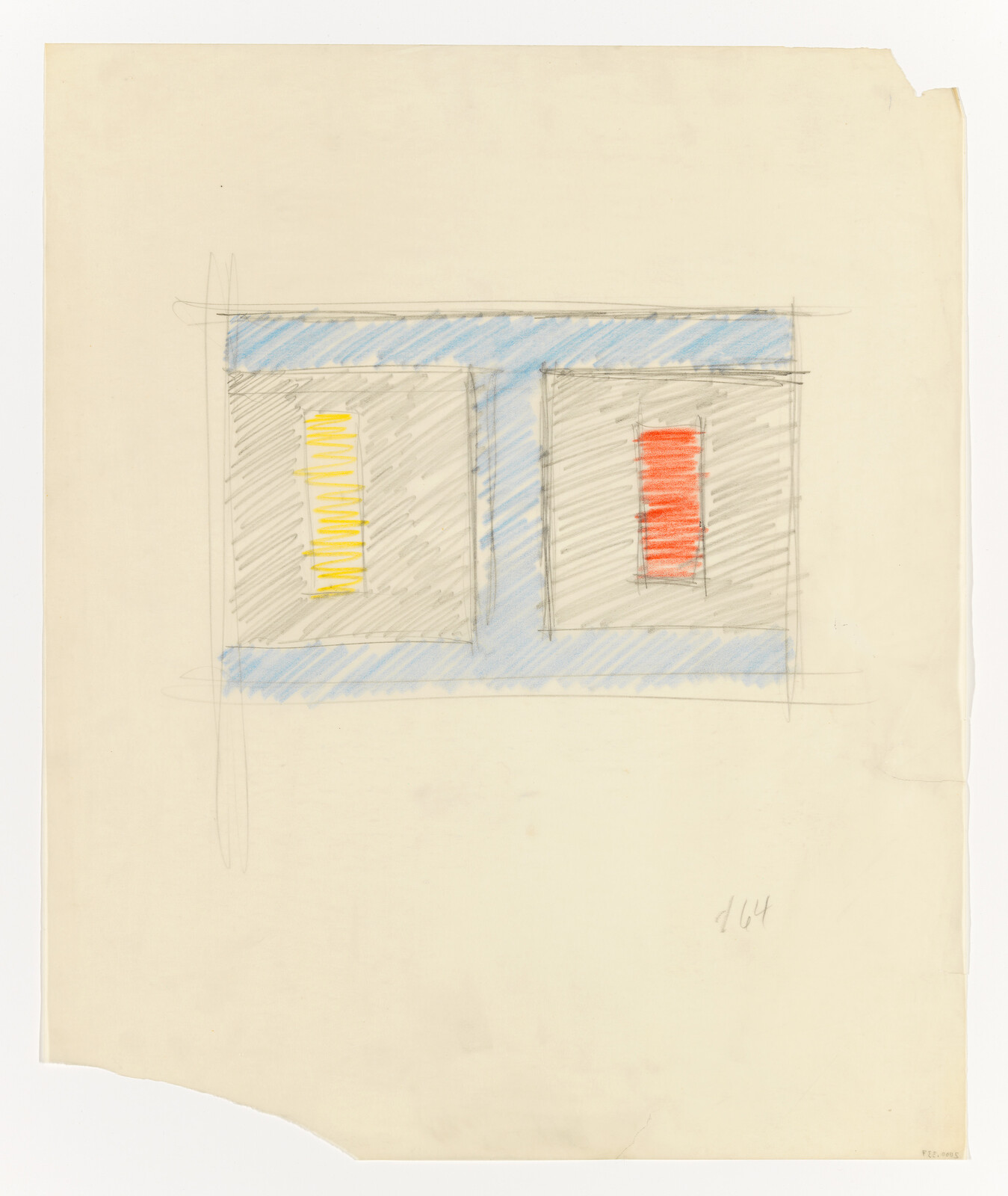
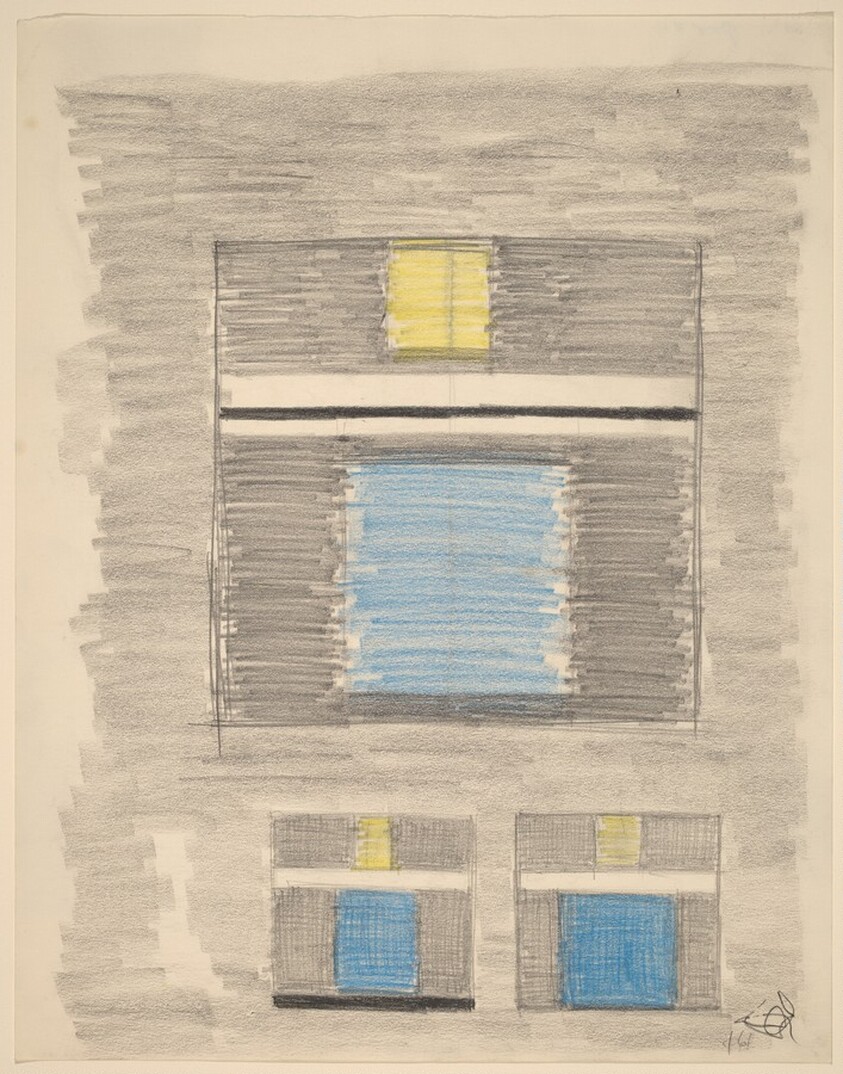
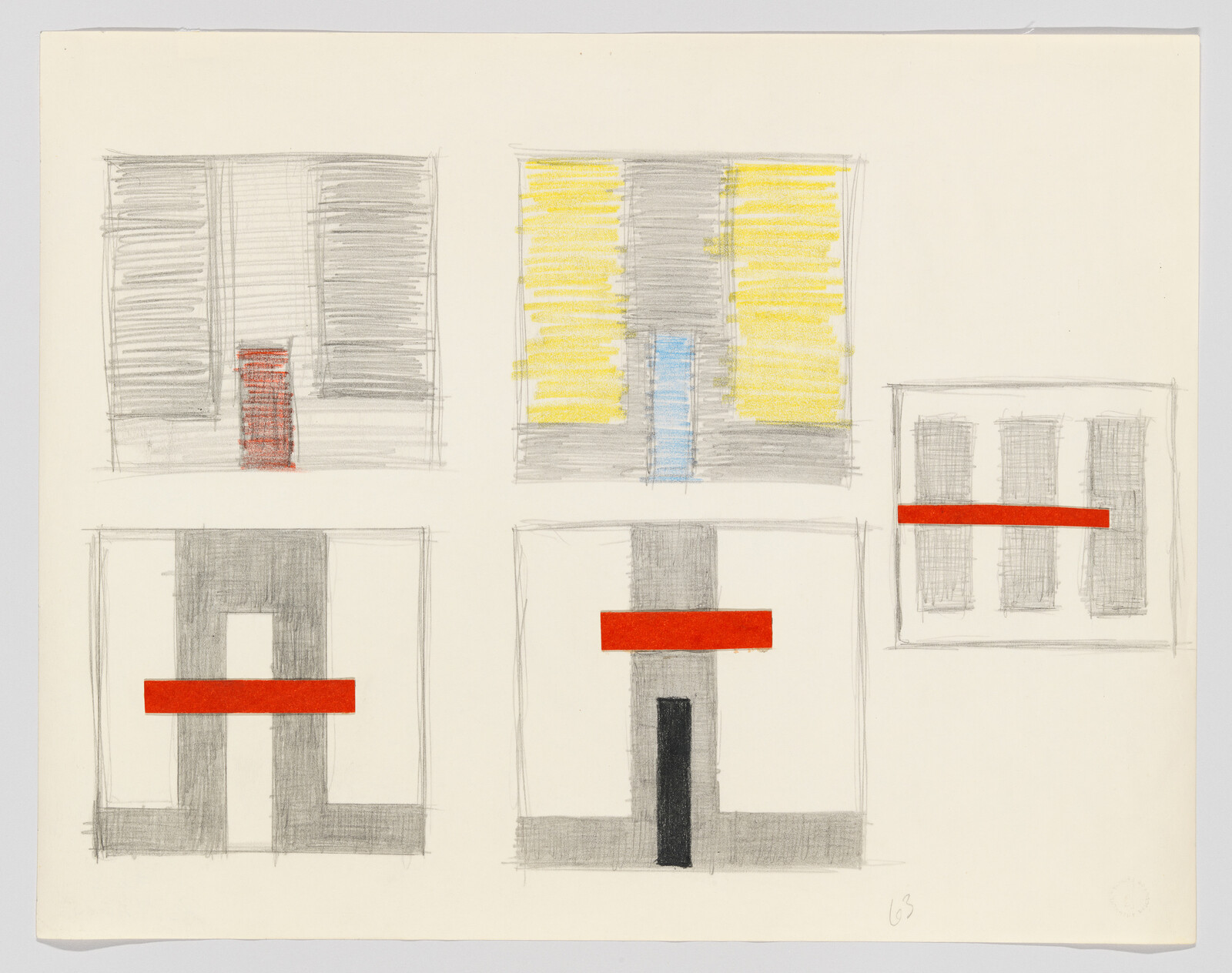
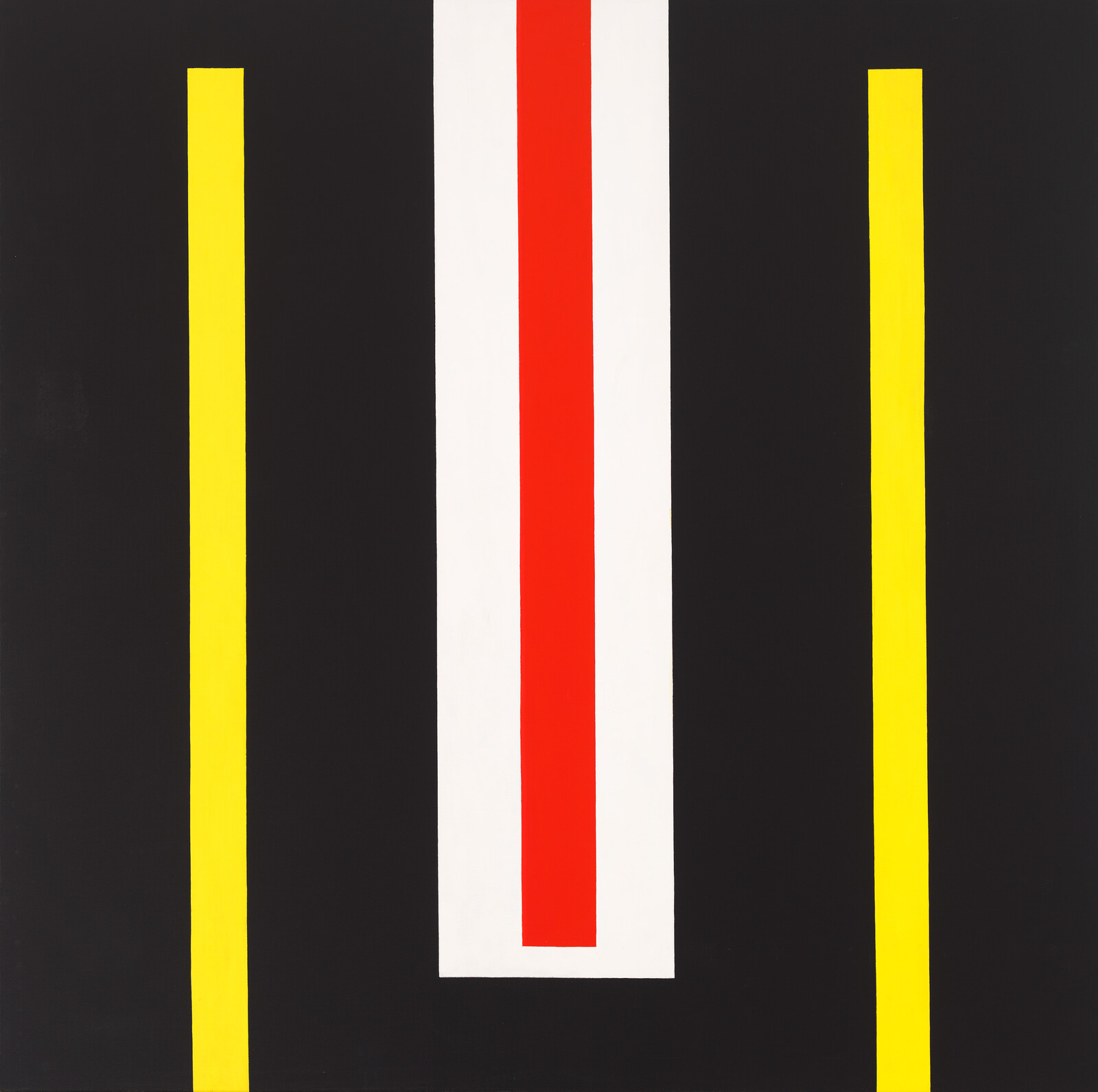
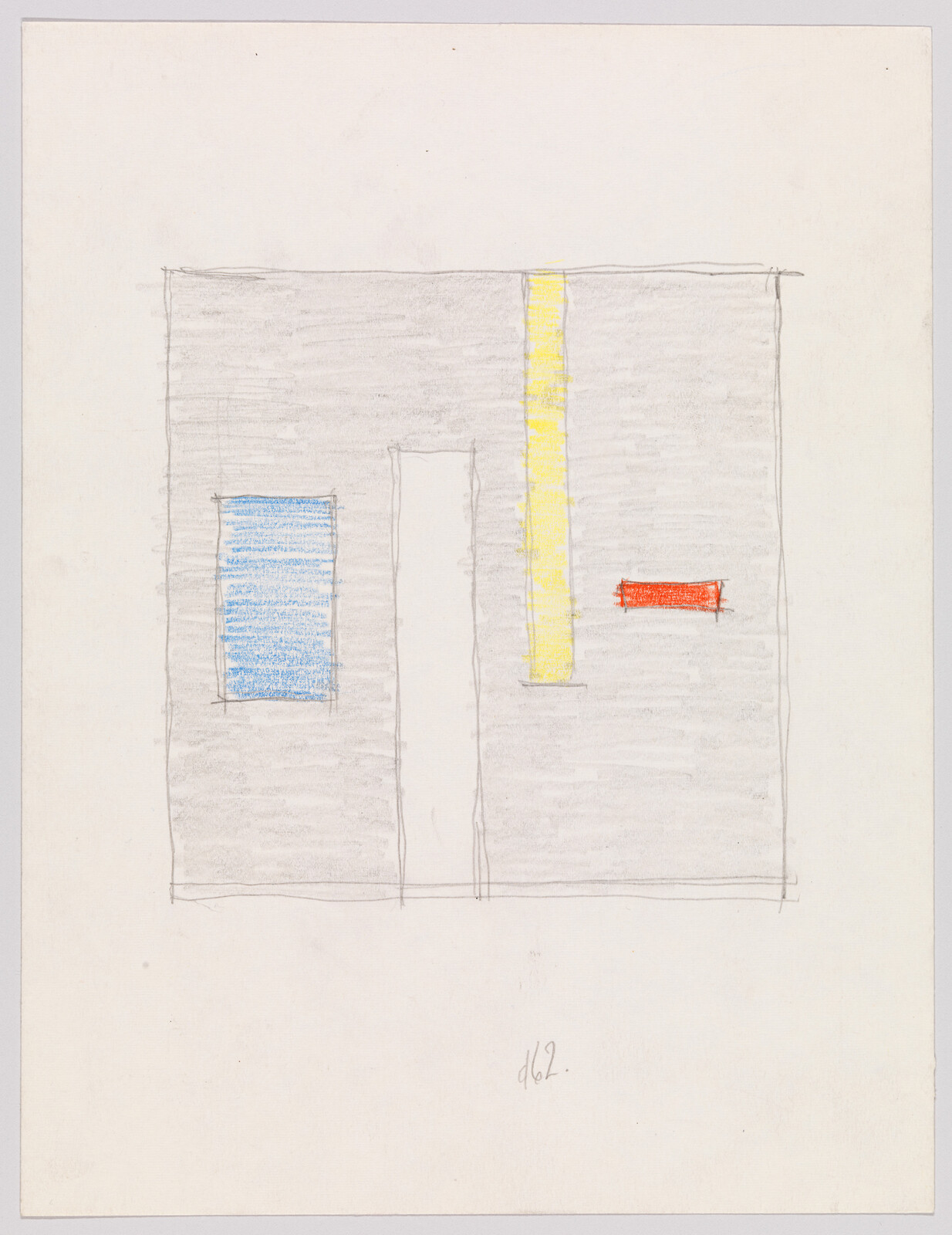
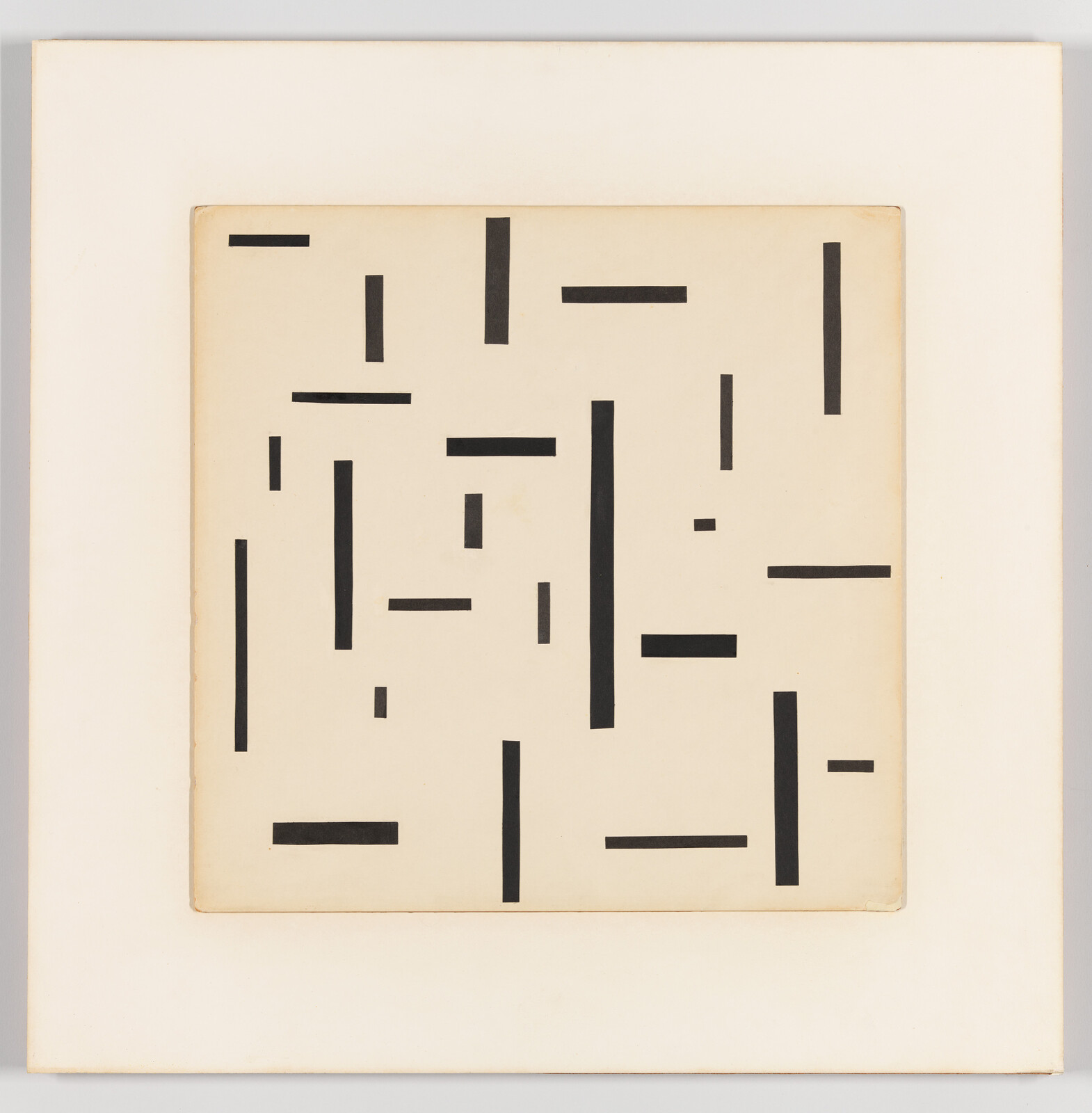
A stark white canvas punctuated by intersecting black lines and a yellow rectangle: for Diller, abstraction was “the ideal realm of harmony, stability, and order.” In the 1930s, he was the first American artist to embrace the conventions of the international art and design style called Neo-Plasticism founded by Dutch artist Piet Mondrian: grid-like compositions and a palette limited to black, white, and the primary colors. Many of his paintings were first conceived as collages—he would plan the composition by arranging paper cutouts of lines, squares, and rectangles.