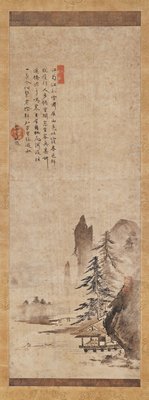
Early Spring Landscape
- Medium
- Hanging scroll, ink and light color on paper
- Dimensions
- 29 3/8 × 10 7/8 in. (74.61 × 27.62 cm) (image) 57 × 14 3/4 in. (144.78 × 37.47 cm) (mount, without roller)
Tags
Japan
About
Beneath impossibly tall pine trees and distant, misty peaks, two men round the bend of a path at lower right. They make their way toward a thatched pavilion nearby, where two more men sit and gaze at fishermen rowing a boat on the river. Above, a poetic inscription reinforces the theme: early spring in an idyllic mountain retreat. South of the river and north of the river, the snow is clearing. Mountains spew forth rosy clouds, springtime colors are fresh. Travelers remove their shoes, though the going is still rough. Opening the window, seated guests enjoy the splendid view. Water flowing beneath the bridge rings like chimes of jade. At the eaves, the wind in the pines tunes its stringless lute. But why is that leaf of a boat moored beside the cliff? It must be a craft for roving ten thousand miles away. Such combinations of a painting with one or more poetic inscriptions are called shigajiku (literally “poem-painting scroll”). They are collaborative works created by groups of Zen monks and lay practitioners, talented poets, calligraphers, and painters who lived not in some serene countryside but in the noisy, crowded spaces of urban monasteries.