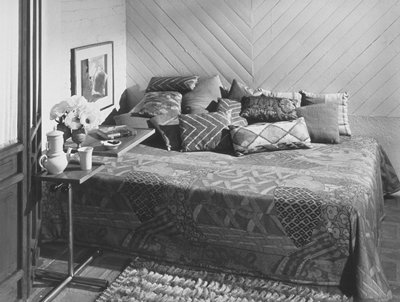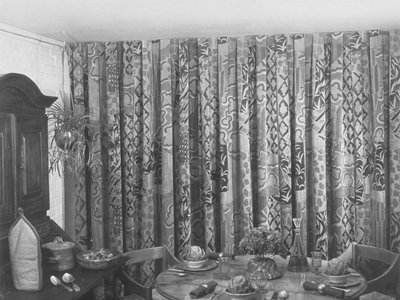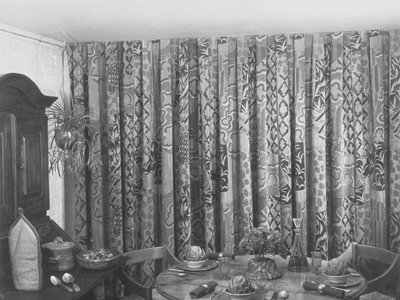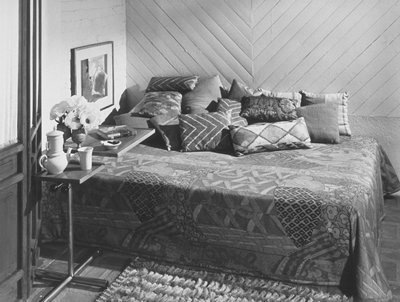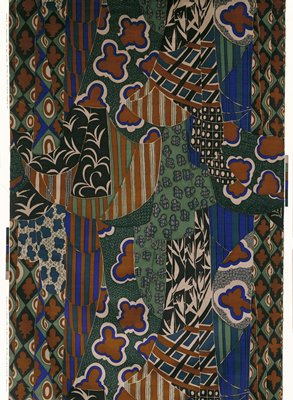
Tropic of Capricorn
- Medium
- Cotton, screen print
- Dimensions
- 85 x 54 in. (215.9 x 137.16 cm)
- Genre
- Textiles
Tags
United States
About
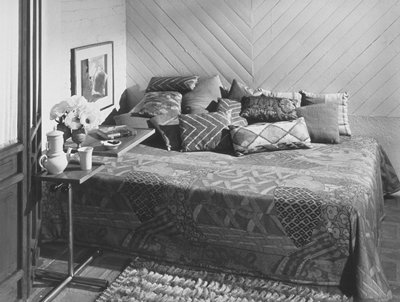
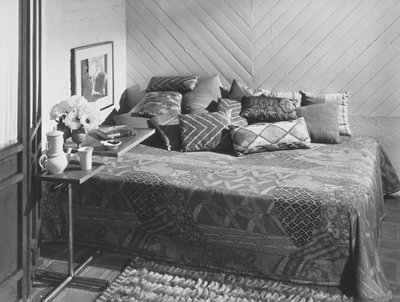
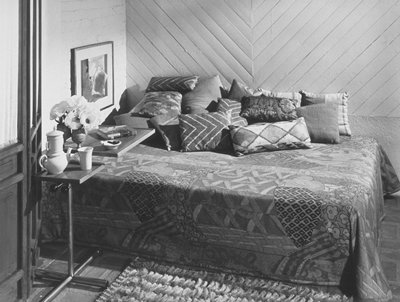
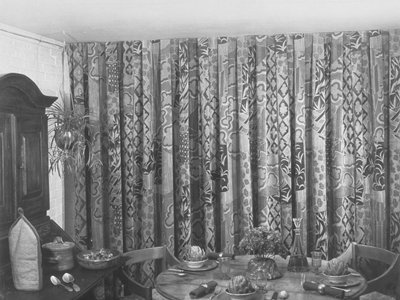
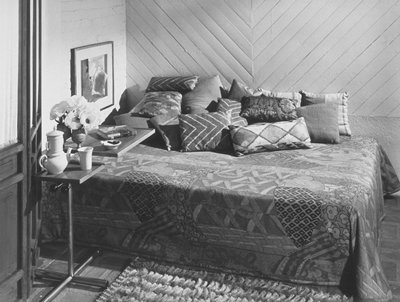
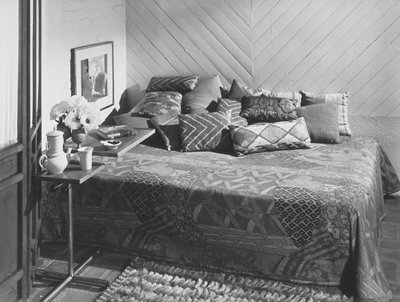
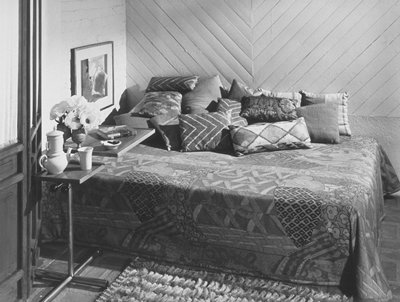
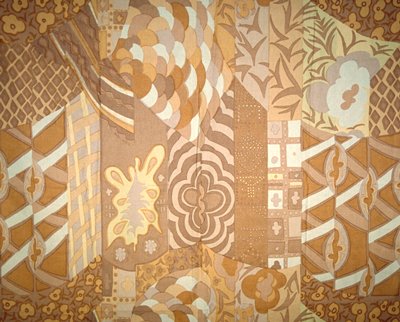
Tropic of Capricorn, with its complex jumble of motifs, has been attributed to two distinct sources in the Larsen literature. The fabric information card from 1964 states, The pattern-on-pattern [theme], softened by superb blending of colors, reflects the Moorish influence of North Africa. In his book, A Weaver's Memoir, however, Larsen refers to the pattern as freely translating the fabric wealth of Nigeria's blue markets…” Merchants of the 'blue markets' specialize in the sale of adire cloth, a traditional indigo resist-dye fabric produced by the Yoruba of Nigeria that features multiple design areas. Many sub-Saharan African textiles, particularly those that utilize dye processes or embroidery techniques, display very sophisticated programs of decoration. Often, the cloth is divided into sections based on a grid and different patterns are placed in each square. Similarly, Islamic art and architecture of North Africa emphasize the juxtaposition of multiple patterns and designs within a single work of art. Publicity materials for Larsen's African Collections cite both of these aesthetic forms as sources of inspiration.