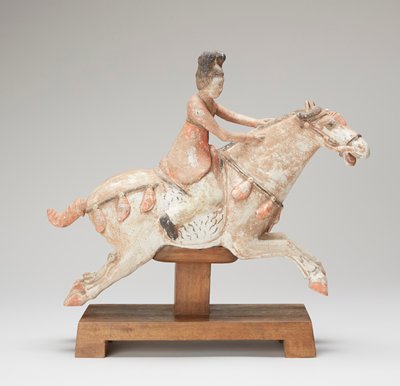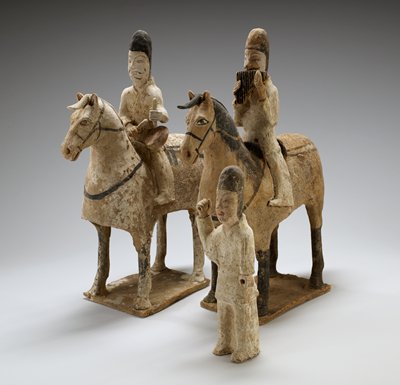
Groomsman, from a three-piece group
- Medium
- Ceramic, pigment
- Dimensions
- 11 1/4 x 3 3/4 x 2 7/16 in. (28.58 x 9.53 x 6.19 cm)
- Genre
- Ceramics, sculpture
Tags
China
About
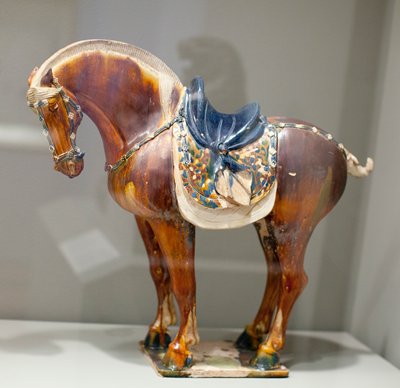
Beginning in the Han dynasty, horses became powerful emblems of civil order and aristocratic status. Tomb art from later periods, including the Northern dynasties, often features mounted attendants in procession, underscoring the horse’s role in projecting rank and authority. Here, musicians ride in stately formation while a groomsman walks beside them, evoking the grandeur of elite ceremonies. Such figurines not only reflected the social prestige of their owners but also ensured that these symbols of status accompanied them into the afterlife. In burial contexts, horses—real or representational—affirmed worldly accomplishment and the enduring dignity of the procession.