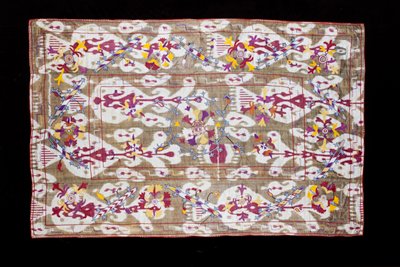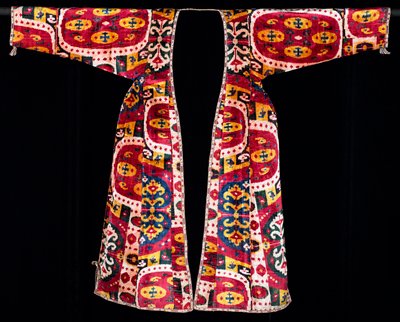
Woman's robe (munisak)
Uzbekistan
1850
- Medium
- Silk, cotton, velvet ikat
- Dimensions
- 51 1/2 x 62 1/2 in. (130.81 x 158.75 cm)
- Genre
- Textiles, clothing
Tags
Uzbekistan
About
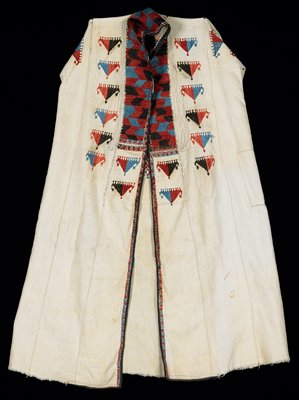
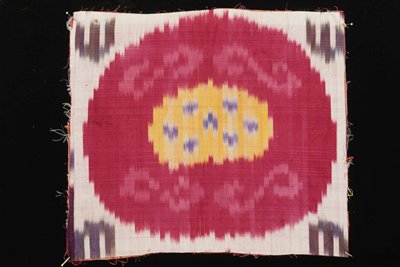
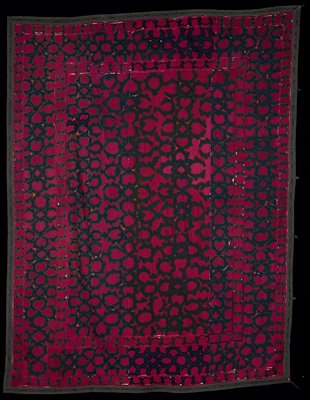
Of all the fabrics used to make the bold and dynamic resist-dyed ikat cloths of central Asia, the most admired and costly was velvet, which was used for wall hangings and household decorations as well as clothing. Costume in central Asia was a general indicator of social rank and geographic origin. A silk velvet ikat robe such as this one, with its dazzling, multicolored pattern and distinctive V-shaped neckline, would have been the most sumptuous garment in a wealthy bride’s trousseau. In many traditions, the munisak was first worn on her wedding day, draped over her head to serve as a veil; it thereafter would be worn on occasions that marked important rites of passage.