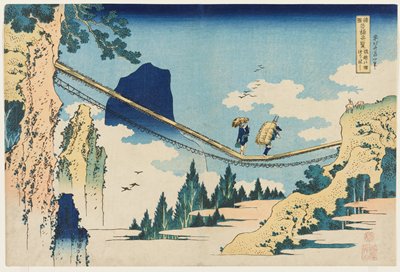
The Suspension Bridge on the Border of Hida and Etchū Provinces
- Medium
- Woodblock print (nishiki-e), ink and color on paper
- Dimensions
- 9 15/16 × 14 13/16 in. (25.3 × 37.6 cm) (image, sheet, horizontal ōban)
- Genre
Tags
Japan
About
Fashioning simple suspension bridges from vines to span mountain rivers or dangerous ravines has been a common practice around the world since ancient times. In rural Japan, where light traffic did not warrant the effort and expense of constructing more permanent structures, vine bridges continued to be built into the Meiji era (1868–1912). The print’s title notes the remote location of this bridge, on the border of two provinces in western Honshu. Hokusai dramatically emphasized both the dizzying height of the bridge above the mist-cloaked treetops and the flexibility that causes its shape to change with each footstep of those traversing it. Nevertheless, the image has a bucolic serenity. The peasants crossing the chasm seem unconcerned about their safety. The foremost worker plods along, and the woman behind him appears to be taking in the view.