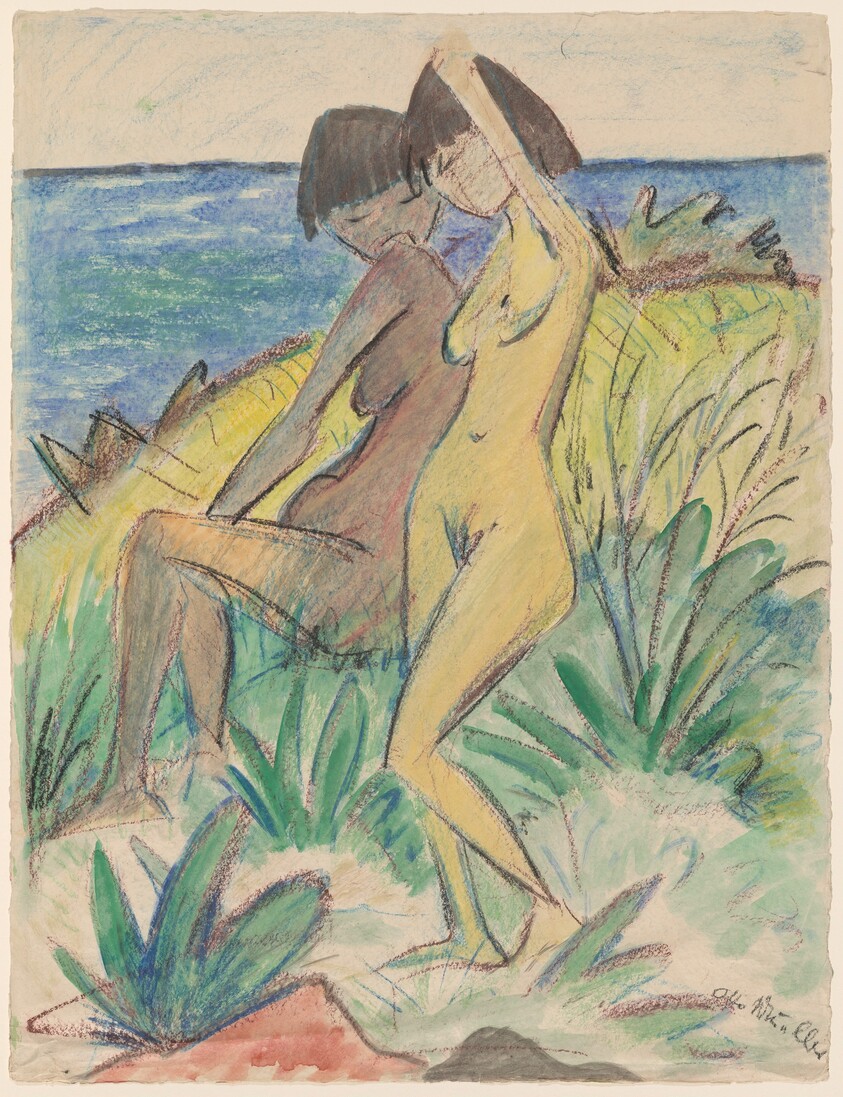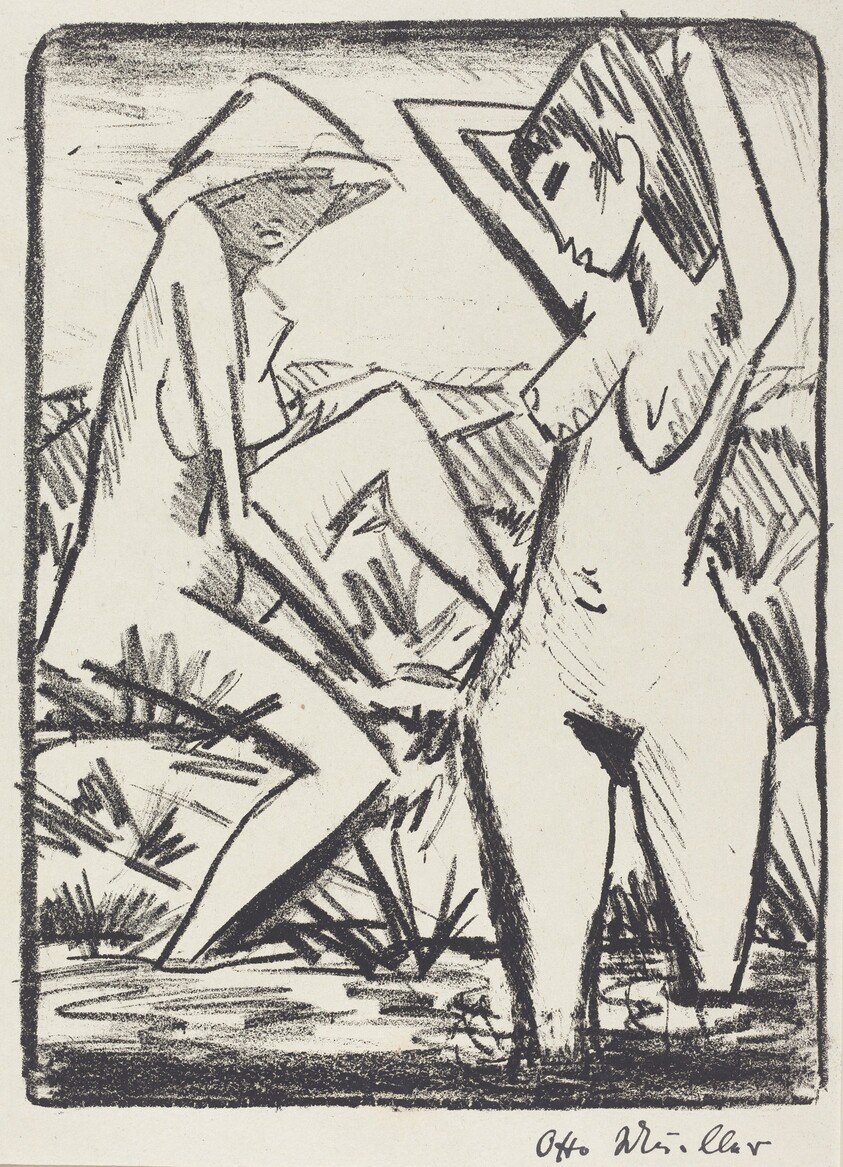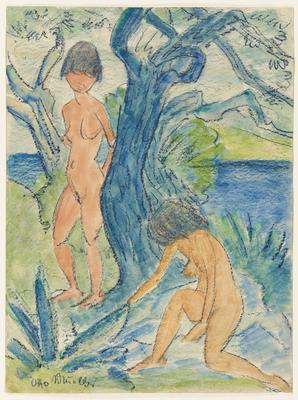
Two Bathers
Otto Mueller
1923
- Medium
- Graphite, watercolor, and blue pastel on paper
- Dimensions
- 26 1/2 x 19 3/4 in. (67.31 x 50.17 cm) (sheet) 32 1/2 × 25 7/16 × 1 3/4 in. (82.55 × 64.61 × 4.45 cm) (outer frame)
- Genre
- Drawings
Tags
Germany
About
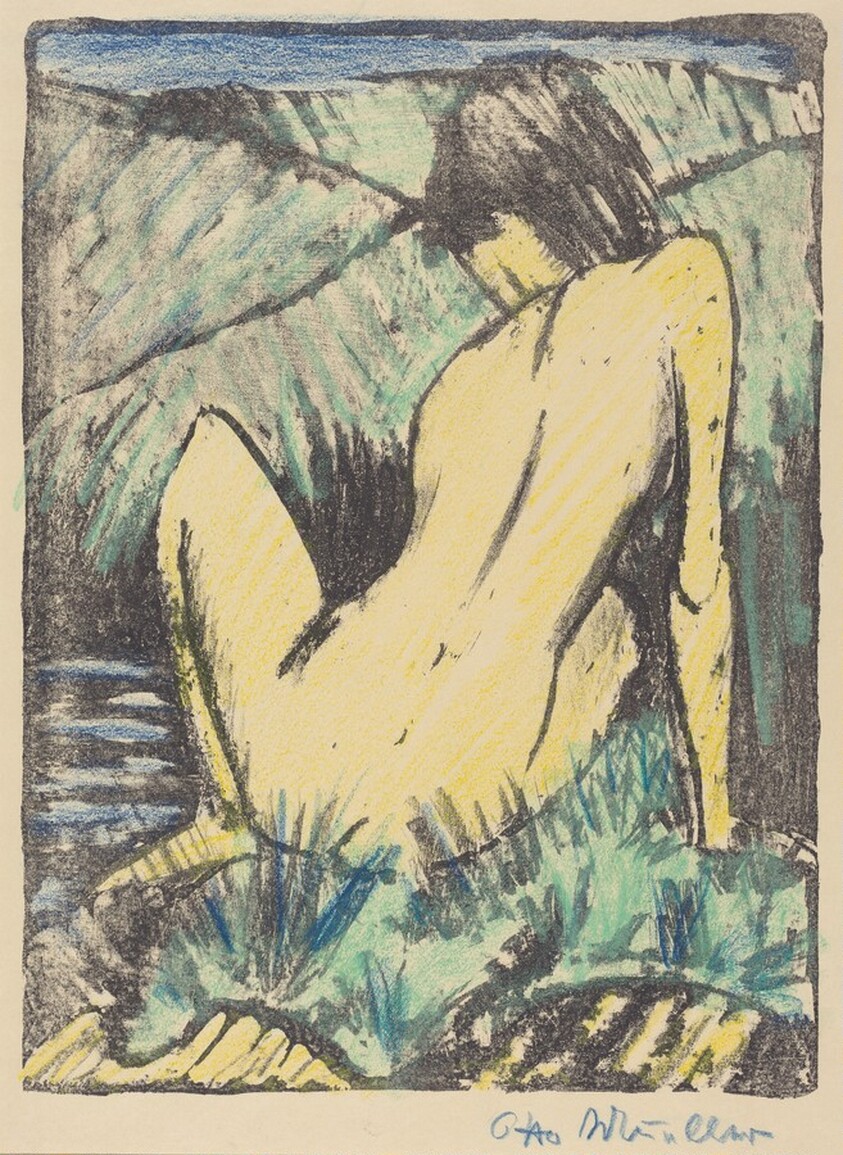
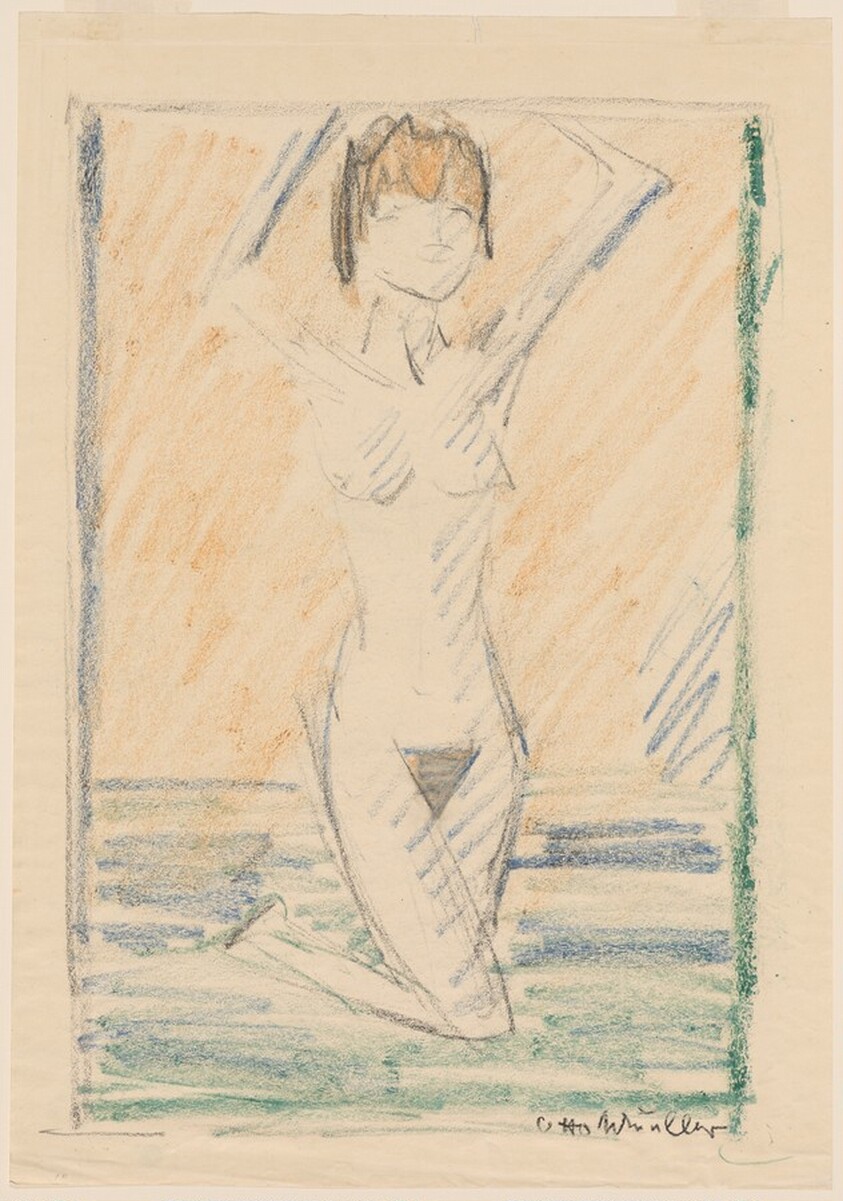
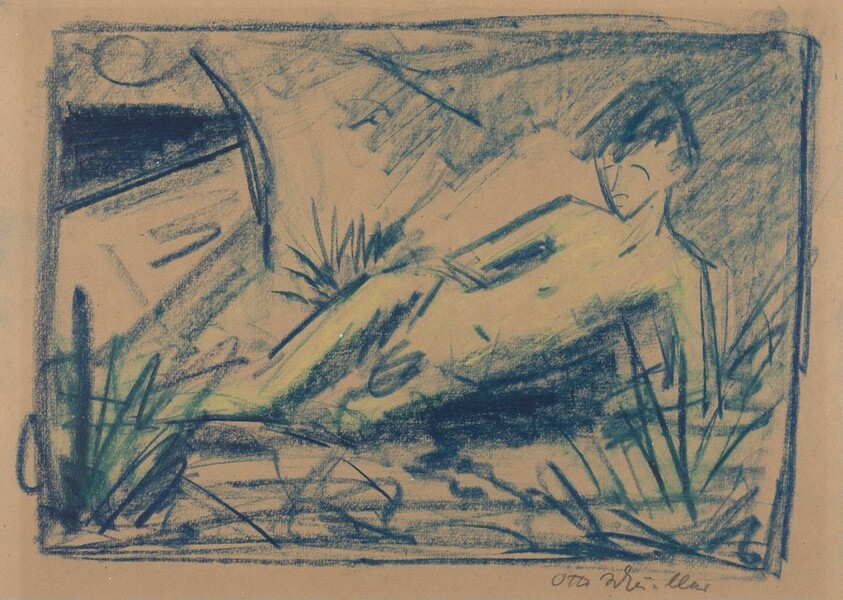
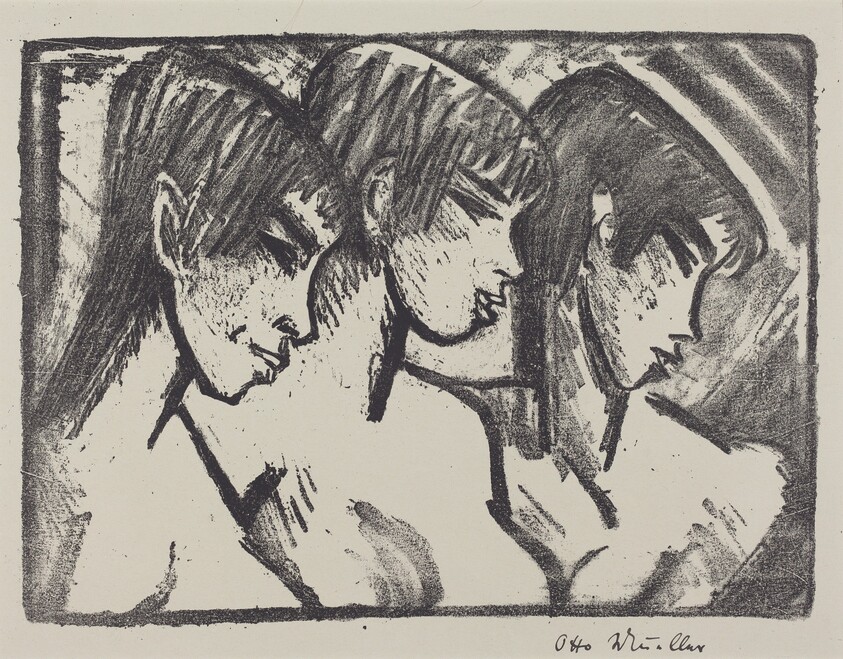
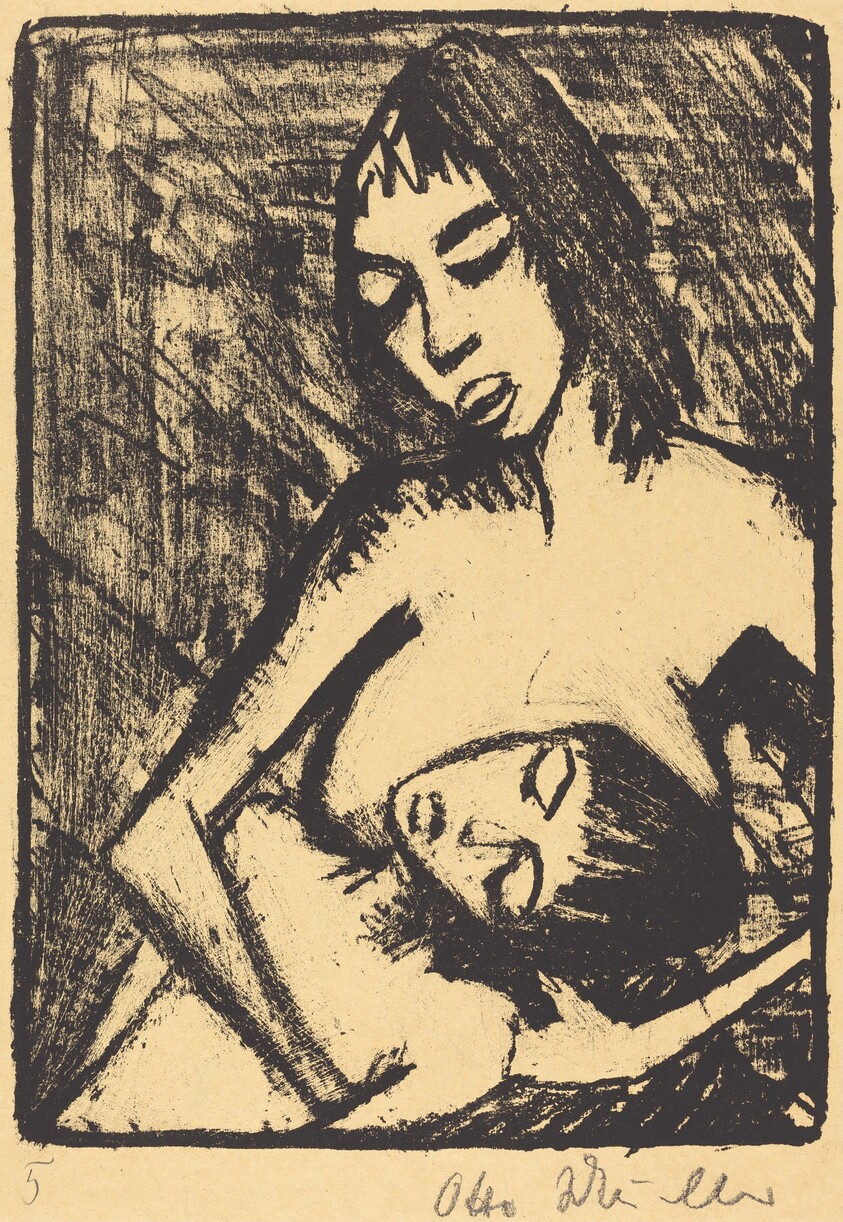
Bathers and other female nudes in sylvan settings were Otto Mueller’s central theme for much of his career. Like his fellow members of Die Brücke—the most radical of the Expressionist artist groups—he rejected traditional academic goals. The flatness of Mueller’s figures, lack of illusionistic space, and arbitrary colors asserted that his was an art of the mind, not of direct observation leading to a facsimile of nature. He cared little for detail, texture, and specificity. His figures occupy a timeless, peaceful, somewhat melancholy world. He distanced himself from Germanic idealization with clues pointing to other racial strains. In later years, the question of Mueller’s racial origins—particularly whether he was part gypsy—became a matter of debate. Although he explicitly depicted gypsies and styled himself an exotic, he held his cards to his chest on this highly charged question.