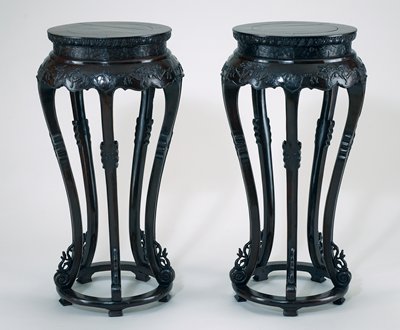
Incense Stand, one of a pair
- Medium
- Zitan
- Dimensions
- 34 3/4 x 18 1/4 x 18 1/4 in. (88.27 x 46.36 x 46.36 cm)
- Genre
- Woodwork-furniture
Tags
China
About
In their earliest form, incense stands were used by the Chinese to present offerings to the Buddha. With time, the incense stand was adapted to domestic settings, however unlike chairs or beds, it retained its spiritual implications. It ws often used in formal occasions as well as to display flowers or antiques. These paired stands are superbly developed examples of the cabriole-leg style with round top. Made from zitan, one of the rarest and hardest woods known, the elegant five-legged stands are unified by their consistent and complex joinery, as well as their carved decoration and excellent proportions. Very few pairs of zitan incense stands have survived. Because the rare hardwood was largely controlled by the court, these might have once been set with incense burners flanking an aristocratic couch or even a throne. Ch'ing dynasty throne settings often included a pair of incense stands like these supporting animal-shaped censers placed to the front on either side of the throne.