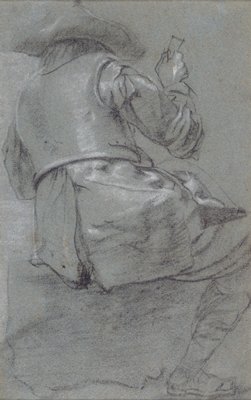
Seated Male Figure, Seen from Behind
- Medium
- Black chalk heightened with white, on blue laid paper
- Dimensions
- 9 3/4 x 6 3/4 in. (24.77 x 17.15 cm)
- Genre
- Drawings
Tags
netherlands
About
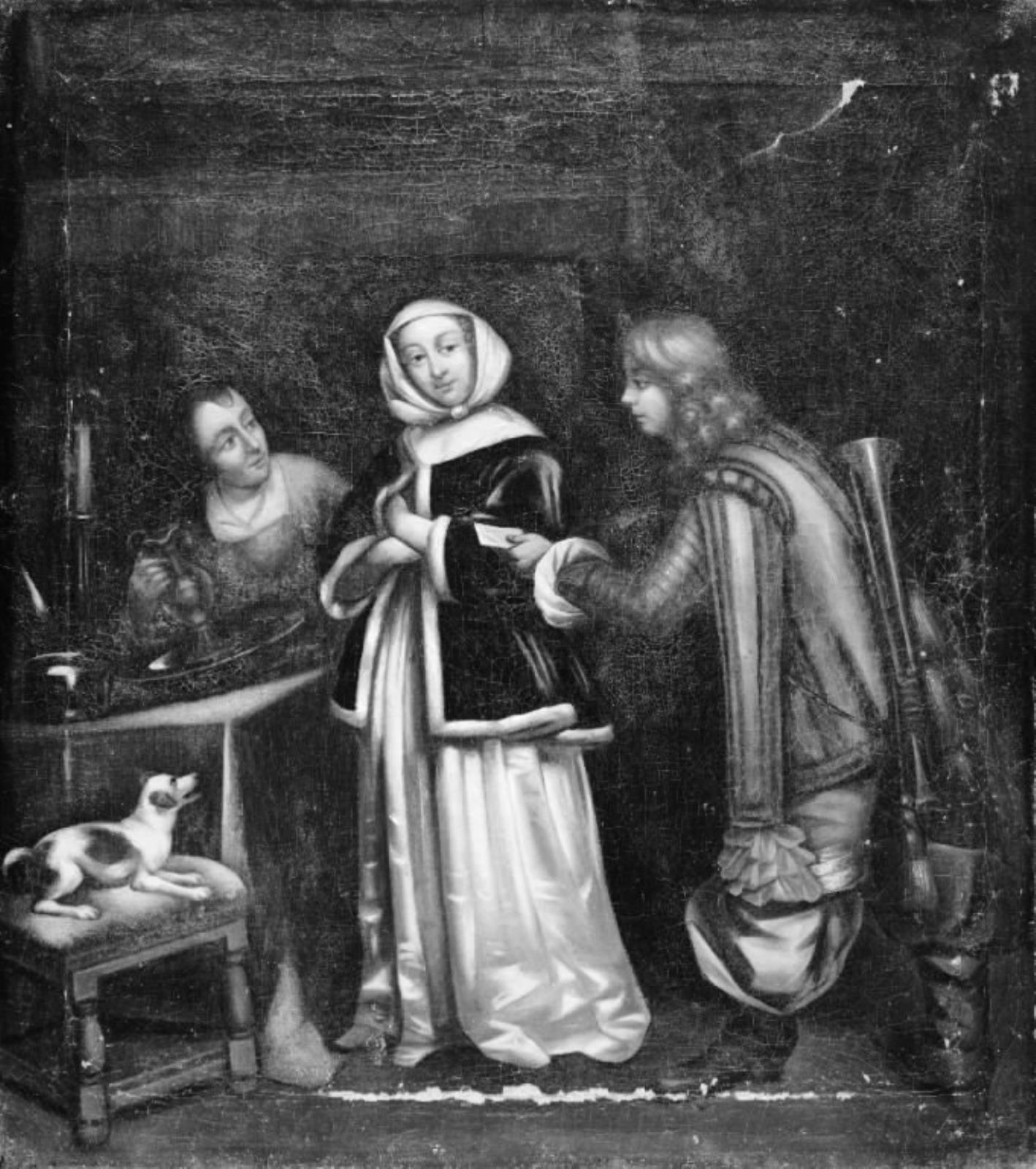
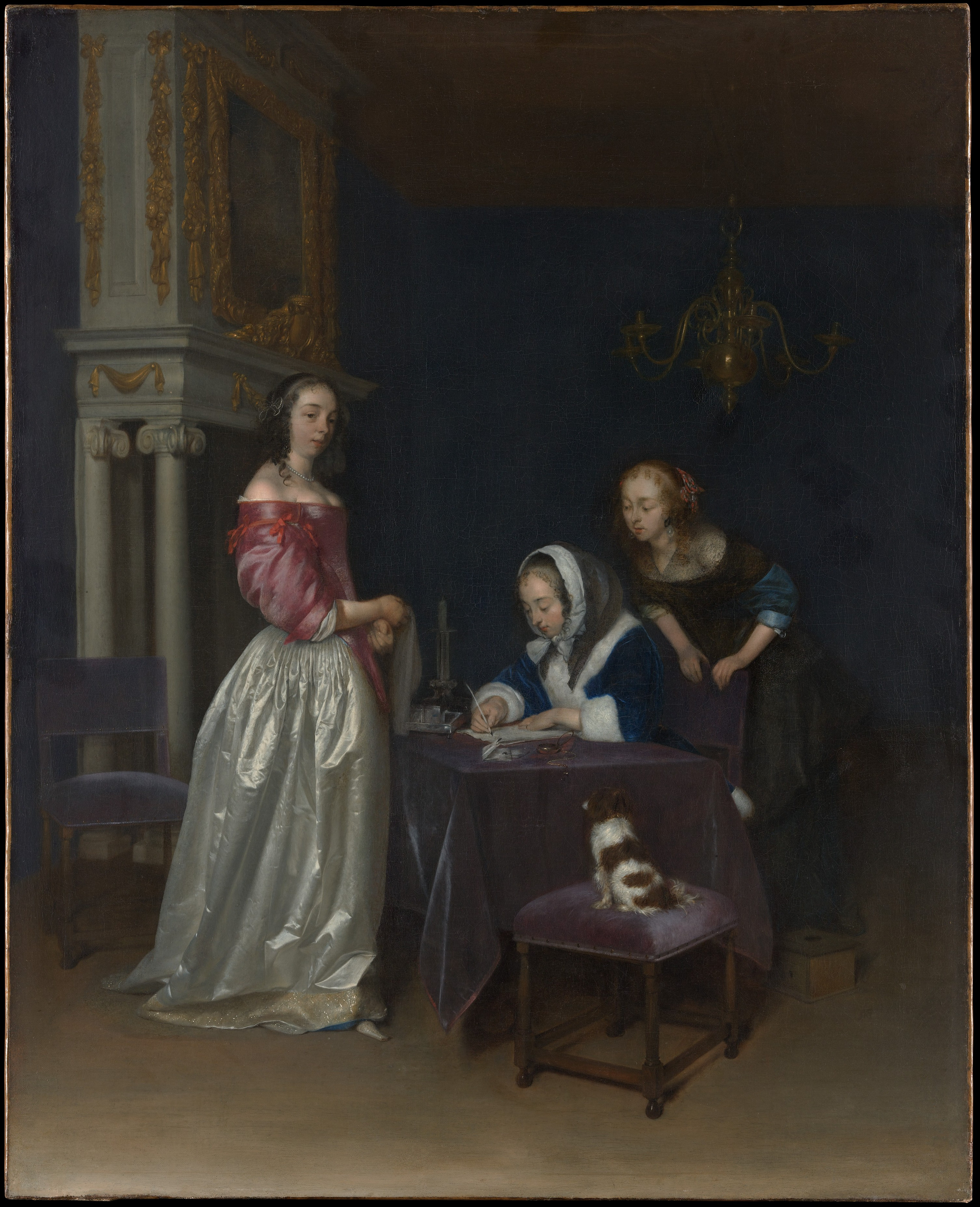
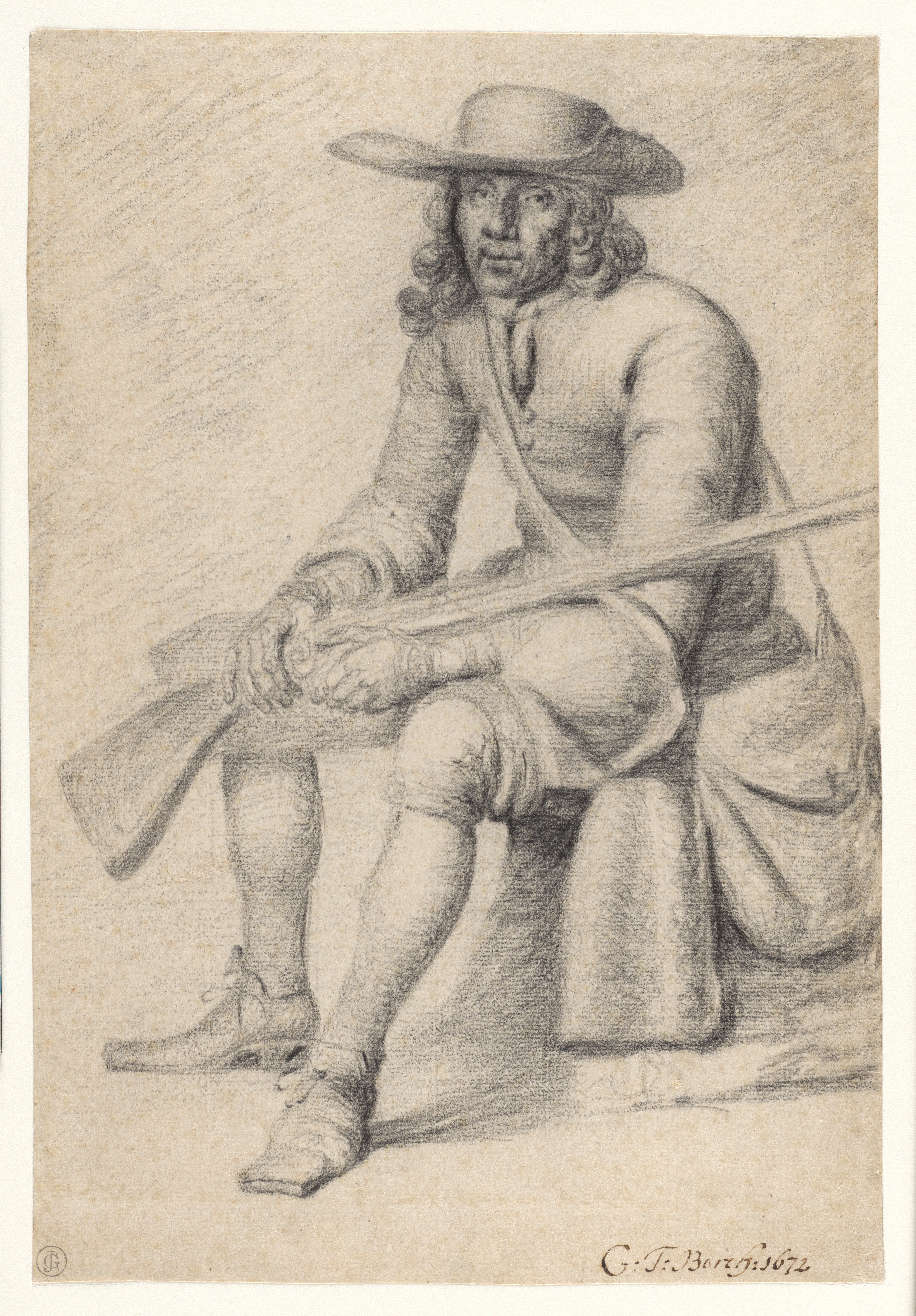
The son of a prosperous artist, Gerard ter Borch studied in his father's studio, as did most of his 13 brothers and sisters. From his earliest known sketch, executed at the age of seven (Amsterdam, Rijksmuseum), Gerard favored figures viewed from behind. Perhaps it reflected his use of a mannequin rather than a live model. His father, in fact, had sent young Gerard a mannequin in a trunk full of art supplies when Gerard was studying in London, and penned a note urging its use: Don't let it stand idle, as it has done here [Zwolle], but draw a lot: large figurative groups with movement. In this study, ter Borch achieves a measure of movement within a decidedly static pose, portraying the seated figure with his hand raised, gesturing with a playing card. It is also an accomplished costume study. The figure's back plate has the subtle sheen of metal, while the drapery of his sleeves and jacket is rumpled and worn.