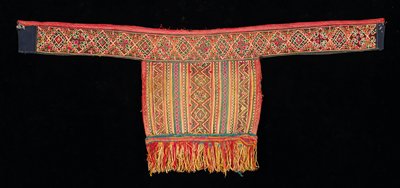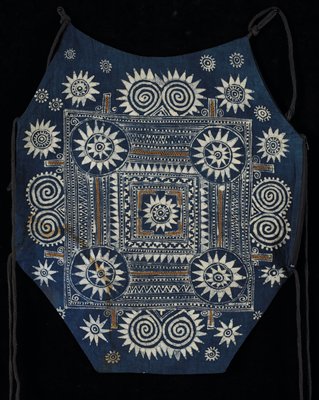
Woman's Bib
- Medium
- Cotton, resist dyed (batik) and embroidery
- Dimensions
- 19 x 16 5/16 in. (48.26 x 41.43 cm) (without ties)
- Genre
- Clothing, textiles
Tags
Vietnam
About
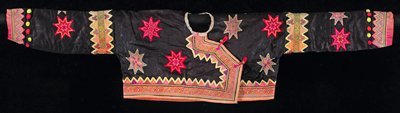
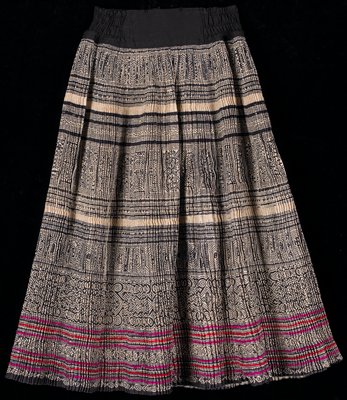
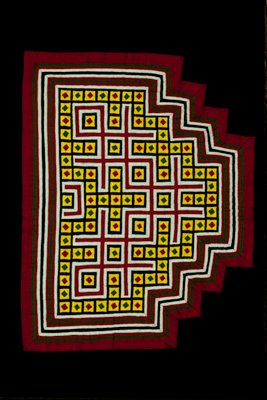
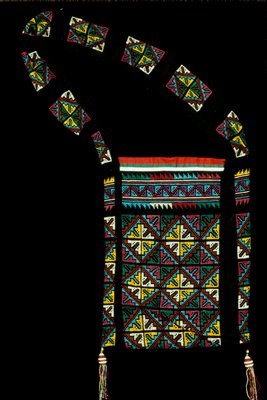
In Hmong tradition, women have created complex textiles, often with geometric, abstracted patterns, that provide a shared visual language within an oral culture. Among the most difficult to produce are indigo batiks, which depend on a resist-dyeing process. First, the design is drawn on the cloth with wax, which resists dyeing and protects the pattern. Then the cloth is dipped in an indigo dye bath. Next, the wax is removed, revealing the intricate design. Patterns signify communal values, with the spiral motifs seen here associated with family. Over centuries of displacement, the Hmong use textiles as a primary transmitter of culture.