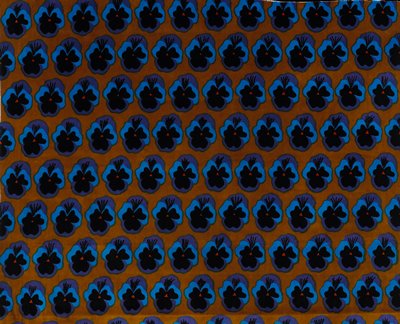
Pansy
Albert York
1970
- Medium
- Cotton, dyed
- Dimensions
- overall: 39 x 55 in. (99.06 x 139.7 cm)
- Genre
- Textiles
Tags
United States
About
The printed velvets produced in the 1960s and 1970s created a high profile for the company once clients realized the dramatic and diverse potential of these fabrics. Intensity of color was essential to the design’s overall effect. Traditionally, textile producers had difficulty achieving this depth of color on velvet because the surface pile interfered with dye penetration. Larsen developed a short, dense pile suitable for fine upholstery yet open enough for the dye to penetrate. The company created dozens of distinctive designs in innumerable color ways. The archive samples shown here illustrate many of the factors designers needed to consider. The color bars on the side of Monarch II and Jezebel indicate the number of colors used to achieve the pattern. The red Pansy sample demonstrates how pattern repeats are developed, and the blue example indicates the problems that result when printing is not carefully calibrated. This yardage could not be sold because the distorted alignment would have been obvious when the fabric was seamed.
