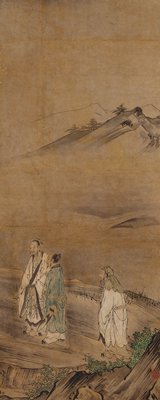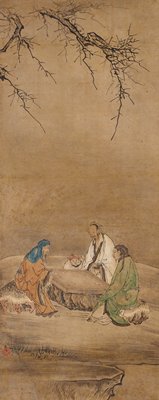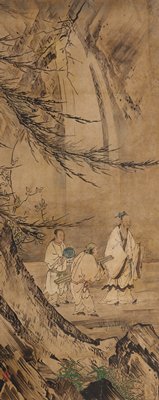
Chinese Figures in a Landscape, from a set of three
- Medium
- Hanging scroll, ink and color on paper
- Dimensions
- 46 1/8 x 18 3/4 in. (117.16 x 47.63 cm)
- Genre
- Paintings
Tags
Japan
About
This trio of paintings shows Chinese gentlemen and several younger attendants in a mountain setting. They may once have been part of a larger set of paintings depicting figures engaged in the so-called Four Accomplishments--music, chess, calligraphy, and painting. Given their large scale and cropped compositions, it is possible that they were originally mounted on sliding doors. They may have been damaged and remounted as hanging scrolls in order to salvage the remaining fragments. The facile brushwork delineating the sages' costumes and facial features suggests that they were created by or in the circle of Kanō Eitoku, the renowned leader of the seminal Kanō studio during the late 1500s. The red seals reading Eitoku in the lower corners of the paintings are spurious and were added at a later date.