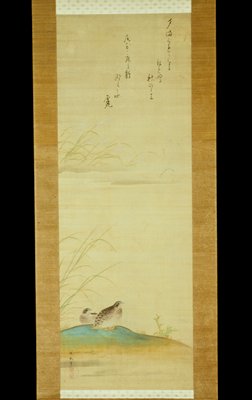
Two Quails with Pampas Grass
- Medium
- Hanging scroll, ink and color on silk
- Dimensions
- 36 13/16 x 13 1/8 in. (93.5 x 33.34 cm)
Tags
Japan
About
A pair of quails gaze into the distance as pampas grass sways in the breeze. The inscription above is a Japanese poem (waka) written in a 5-7-5-7-7 syllable pattern: When the darkness falls [at dusk] / sleeves waving in the shadows / in the autumn field / lying on tail-like flowers [pampas grass] / quails cry in their bed The subject of poems since the classical Heian period (794-1185), quails became associated with autumn in a poetry anthology from the eleventh century. The author of this poem used multiple associations that connect to quails—autumn, pampas grass, bed, cry—to demonstrate his knowledge of classical poetry. The painting, though relatively simple in comparison, takes on a new meaning with the references to the bird’s cries and evoked scenery. Building upon precedents, both poet and painter created a new collaborative work.