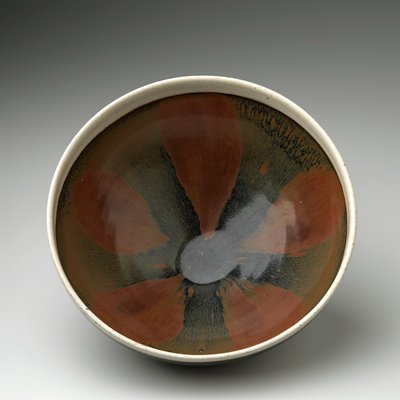
Bowl with White Rim
- Medium
- Cizhou type ware Stoneware with brown glaze and markings in overglaze iron oxide, rim with clear glaze over white slip
- Dimensions
- 3 7/16 x 7 1/8 in. (8.73 x 18.1 cm)
- Genre
- Ceramics
Tags
China
About
Dark glazed bowls with large, evenly spaced russet brown splashes became popular at Cizhou kilns in north China around the twelfth century. The white rim band is probably intended to simulate a silver rim band of the type used to protect the delicate edges of more expensive porcelains. The use of large, evenly spaced, radiating splashes against a thinly streaked hare's-fur ground demonstrates the Jin taste for abstract, structured designs. They differ in spirit from the more random splashed effects of the tortoiseshell glazes produced at the roughly contemporary Qizhou kilns in southern China. When the Jin Jurchins conquered the territory of Liao and Northern Song in 1115, they already had a flourishing ceramic industry. Jun, Ding, and Cizhou type wares of varying degrees of refinement continued to be manufactured and many have been excavated from Jin sties. This bowl with its off-white clay body suggests that it was made at a Cizhou type kiln in Hebei or Henan province. The extension of the glaze to the foot-rim and the precision with which the white rim meets the dark glaze suggest a twelfth century date.