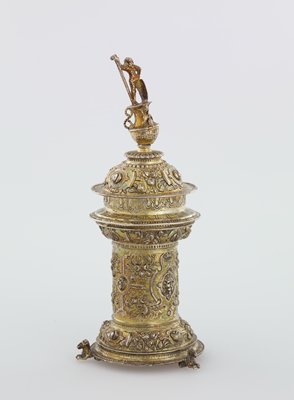
Standing salt
- Medium
- Silver, gilt silver
- Dimensions
- 8 5/8 x 3 1/2 x 3 1/2 in. (21.91 x 8.89 x 8.89 cm)
- Genre
- Metalwork
Tags
England
About
From the 14th century, standing salts represented status objects for the table, as they held what was then still a valuable commodity. They were also popular and heavily used in wealthy households, making them rare survivors today. This one, made in Exeter, England, with its cylindrical form and embossed and sculptural details, is typical of the Renaissance. Exeter was a key port for trade with France and had become prosperous since the end of the Hundred Years War a century earlier.