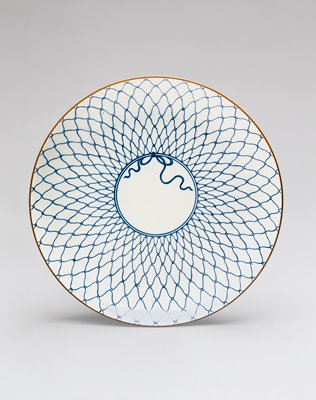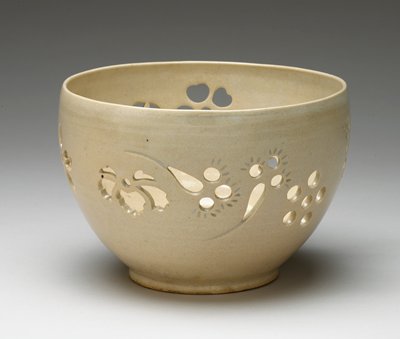
Bowl with Reticulated Designs
- Medium
- Kyōyaki ware, Ko-Kiyomizu type, glazed stoneware
- Dimensions
- 5 5/16 x 7 7/16 x 7 7/16 in. (13.49 x 18.89 x 18.89 cm)
- Genre
- Ceramics
Tags
Japan
About
Ceramics with reticulated (cut-out) designs were first produced in Japan in the early 17th century, probably by émigré potters from Korea where this decorative technique had a long history. The famous Kyoto potter Nonomura Ninsei also used the technique in the mid-17th century, thus popularizing it among artisans within Japan's cultural capital. The floral and vegetable motifs seen here are known as mon-chirashi, or scattered crests, referring to the stylized family crests that became popular among all levels of society during Japan's Edo period (1615-1868).