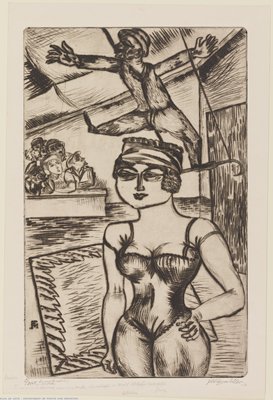
The Acrobat
- Medium
- Drypoint and etching
- Dimensions
- 21 1/2 x 13 3/4 in. (54.61 x 34.93 cm) (plate) 23 15/16 × 16 1/16 in. (60.8 × 40.8 cm) (sheet)
- Genre
Tags
Germany
About
Conrad Felixmüller came to prominence in Germany in the late 1910s when the emotional intensity of Expressionism began to give way to a more objective vision of modern life. The Acrobat depicts a female trapeze artist who poses for the artist while a clown steals her spot on the trapeze and swings over her head, much to the delight of the crowd behind them. Felixmüller seemed drawn to the circus, a separate realm where the bizarre and unusual were commonplace. Indeed, this topsy-turvy world seemed an apt metaphor for the chaotic conditions that wracked German society in the wake of World War I.