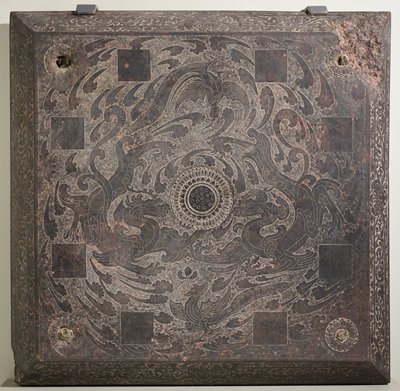
Epitaph cover of Prince Yuan Mi
- Medium
- Black limestone
- Dimensions
- 39 x 40 x 6 3/4 in. (99.06 x 101.6 x 17.15 cm)
- Genre
- Sculpture
Tags
China
About
During the early sixth century in northern China, it was common to place stone memorial tablets in the tombs of the nobility. This protective cover, carved in low relief, contains remnants of bronze handles in the four corners and eight blank squares which were possibly used to position bronze ritual vessels during ancestral ceremonies. The incised decor, consisting of a pair of contending dragons and two phoenixes set against a cloud pattern, has both imperial and Daoist overtones in its symbolism. The low relief carving of this cover and the adjacent sarcophagus are important documents for the development of pictorial art in pre-Tang China.