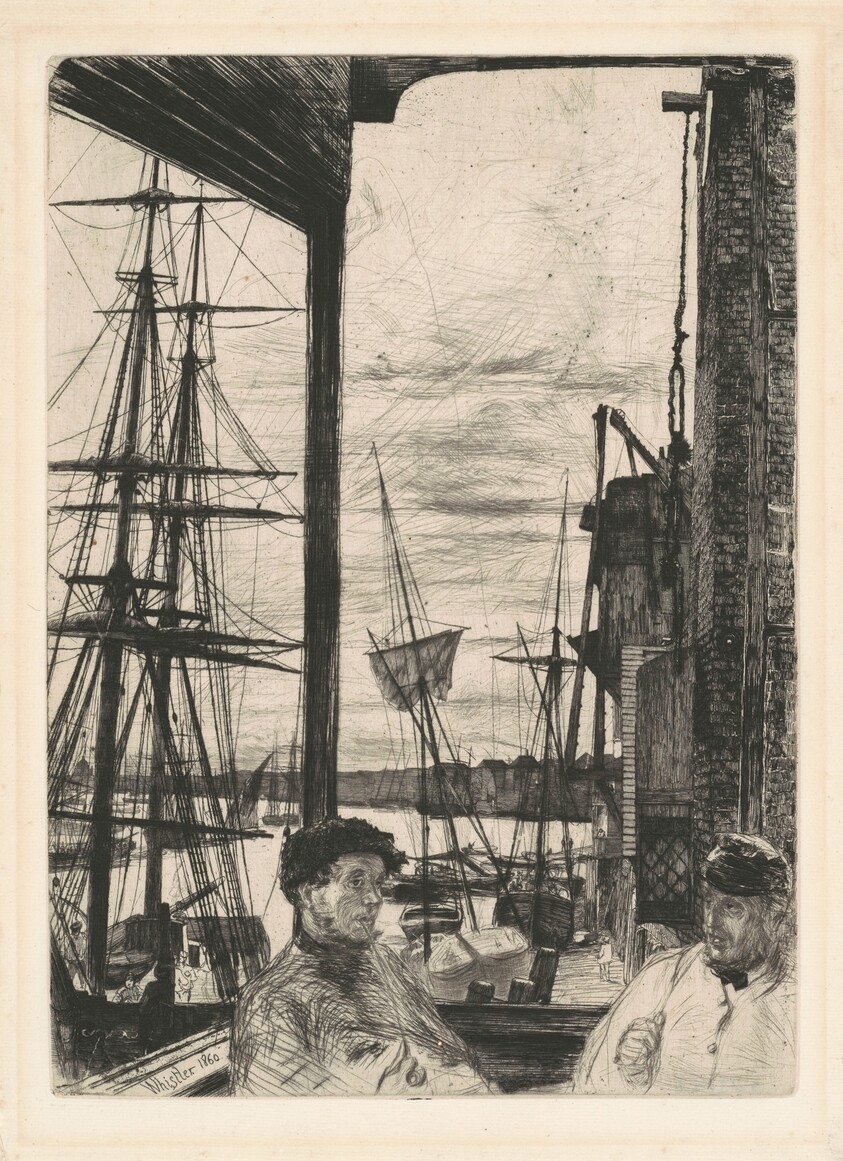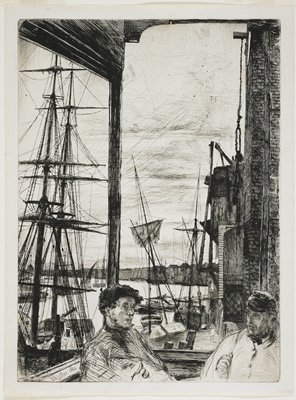
Rotherhithe
- Medium
- Etching
- Dimensions
- 10 7/8 x 7 15/16 in. (27.62 x 20.16 cm) (plate) 11 5/8 x 8 11/16 in. (29.53 x 22.07 cm) (sheet)
- Genre
Tags
United States
About
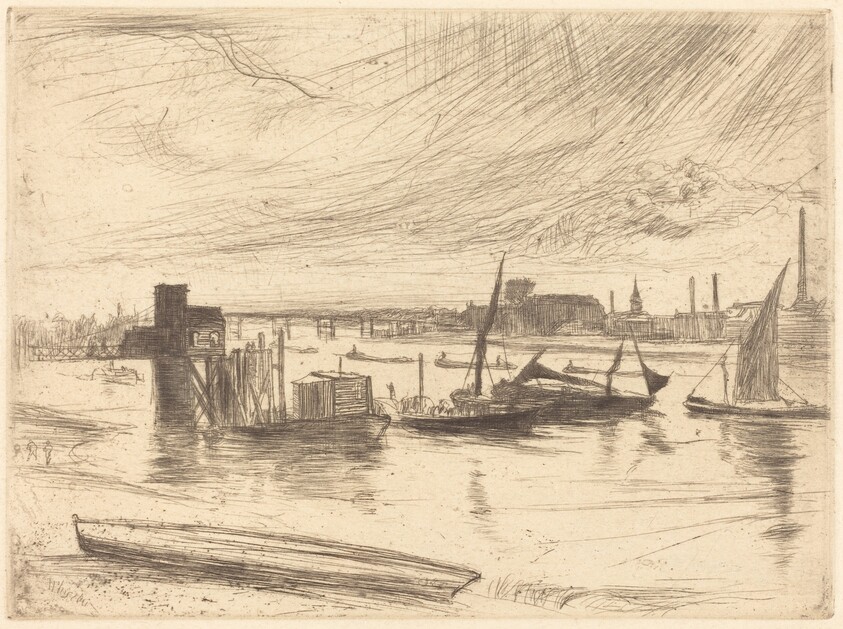
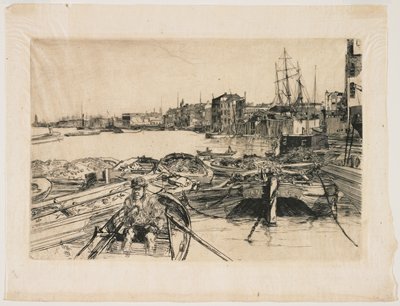
In the fall of 1859, James McNeill Whistler took as his subject the banks of the River Thames in London. At that time, the river was not unlike a cesspool passing through the heart of the city. People feared disease from the polluted water, and workers regularly poured large quantities of lime into the river to control the stench. The area attracted a dangerous crowd, and decent people did not venture there. Despite these conditions, Whistler chose to live beside the river among the laborers and dockworkers. Shortly after he created the sixteen etchings of his Thames Set, reforms swept through the area; by the time his etchings were published in 1871, many of the scenes had been altered and are virtually unrecognizable today.