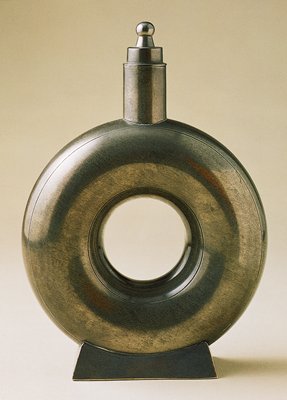
Decanter
- Medium
- Pewter
- Dimensions
- 8 1/4 x 6 1/8 in. (20.96 x 15.56 cm)
- Genre
- Metalwork
Tags
Denmark
About
Following the ambitious Stockholm Exhibition of 1930, which was a wholesale promotion of functionalism in Swedish design, Danish designers pursued further experimentation with material and form. Designers including H.F. Gross moved away from the rich, decorative style in silver in favor of smooth, functionally designed pieces in less expensive metals such as pewter. While the doughnut form is intriguing, especially as a vessel for fluids, it isn't entirely new. The noted British pioneer of modern design, Christopher Dresser, introduced a square doughnut form teapot as early as 1880. A round doughnut form appeared in a series of ceramic teapots produced by the American firm, Hall & Company, in the mid-30s. The appeal of the form apparently won favor on both sides of the Atlantic and continues to be no less evocative today.