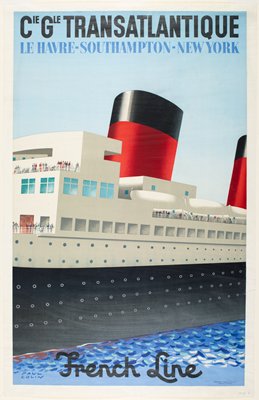
Cie Gle Transatlantique, Le Havre, Southampton, New York, French Line
Paul Colin
1949
- Medium
- Color lithograph, mounted on linen
- Dimensions
- 39 1/4 x 24 3/8 in. (99.7 x 61.91 cm) (image)
- Genre
Tags
france
About
Transatlantic travel surged after the American Civil War, with many shipping lines beginning to accommodate passengers as immigration to America increased. Greater competition among ocean liners caused fares to drop, making it possible for more people to journey to another continent. The advertised ship, most likely the Île de France, set sail in 1927 and boasted a six-day crossing time between Le Havre and New York. This extended journey between home and away suspended passengers in a luxurious environment where they felt free to act in ways they might not under other circumstances. Paul Colin demonstrates that the engineering achievements behind these ships also fascinated the French public. The passengers on the deck are dwarfed by the mass of the ship's hull, and the gleaming smokestacks emphasize the new power that could take them across an entire ocean.