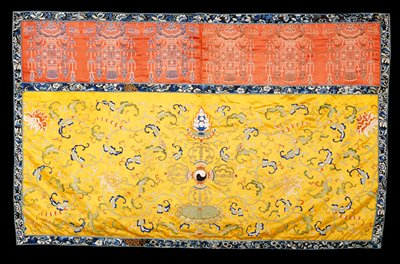
Frontal for a Buddhist altar
- Medium
- Embroidered satin
- Dimensions
- L.38-1/8 x W.60-1/4 in
- Genre
- Textiles
Tags
Tibet
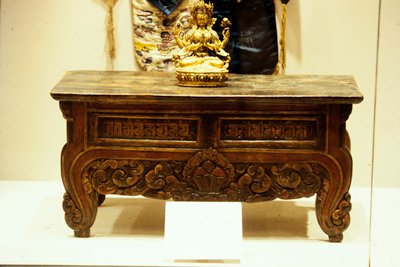
About
Buddhist altar tables were usually skirted with decorative silk frontals, especially for major ceremonies. Probably made for a Lamaist temple in China, this embroidered frontal combines both Tibetan and Chinese symbols in its design. A crossed vajra, or thunderbolt, appears in the center. At the intersection of the two thunderbolts is a black-and-white yin and yang symbol, which represents the balance of opposites found in the universe, a concept developed by the Taoist philosophers of China. The background consists of lotus blossoms, a reference to the spiritual purity that this flower signified to all Buddhists. In the upper register six Chinese-style lanterns occupy a red ground. These most likely symbolize the lantern festival, one of the celebrations associated with the Chinese New Year. In this context, they suggest that this altar frontal was used during New Year ceremonies.