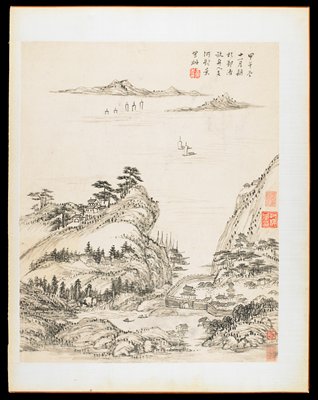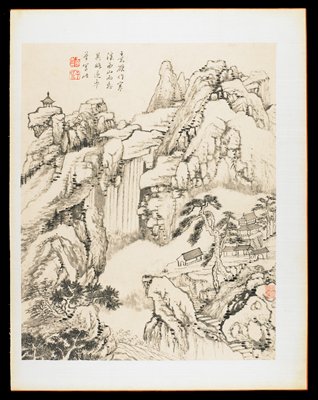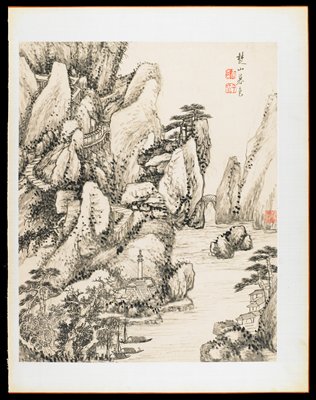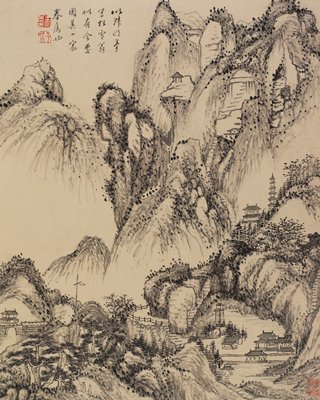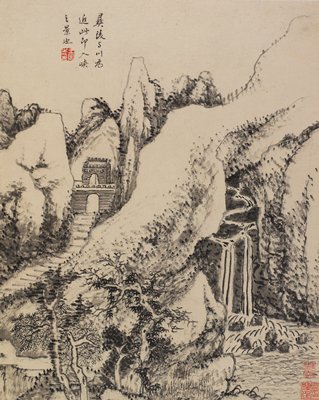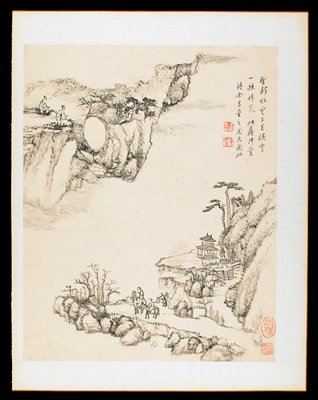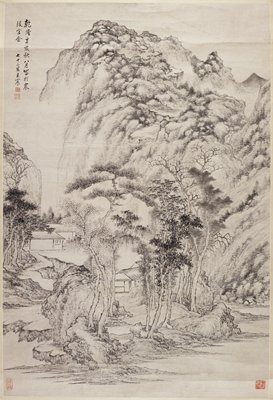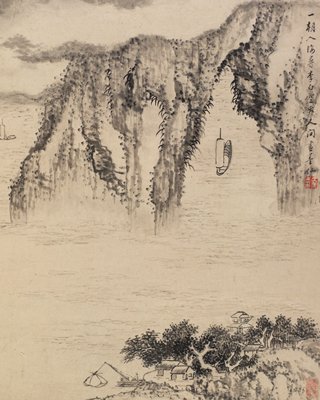
Album Leaf, from Landscapes from Nature, Poetry, and Art
Wang Chen
1774
- Medium
- Ink on paper
- Dimensions
- 16 7/16 x 13 3/16 in. (41.75 x 33.5 cm) (image) 19 3/4 x 15 5/16 in. (50.17 x 38.89 cm) (leaf, overall) 19 15/16 x 15 15/16 x 1 1/4 in. (50.6 x 40.5 x 3.2 cm) (entire album, overall, closed)
- Genre
- Paintings
Tags
China
About
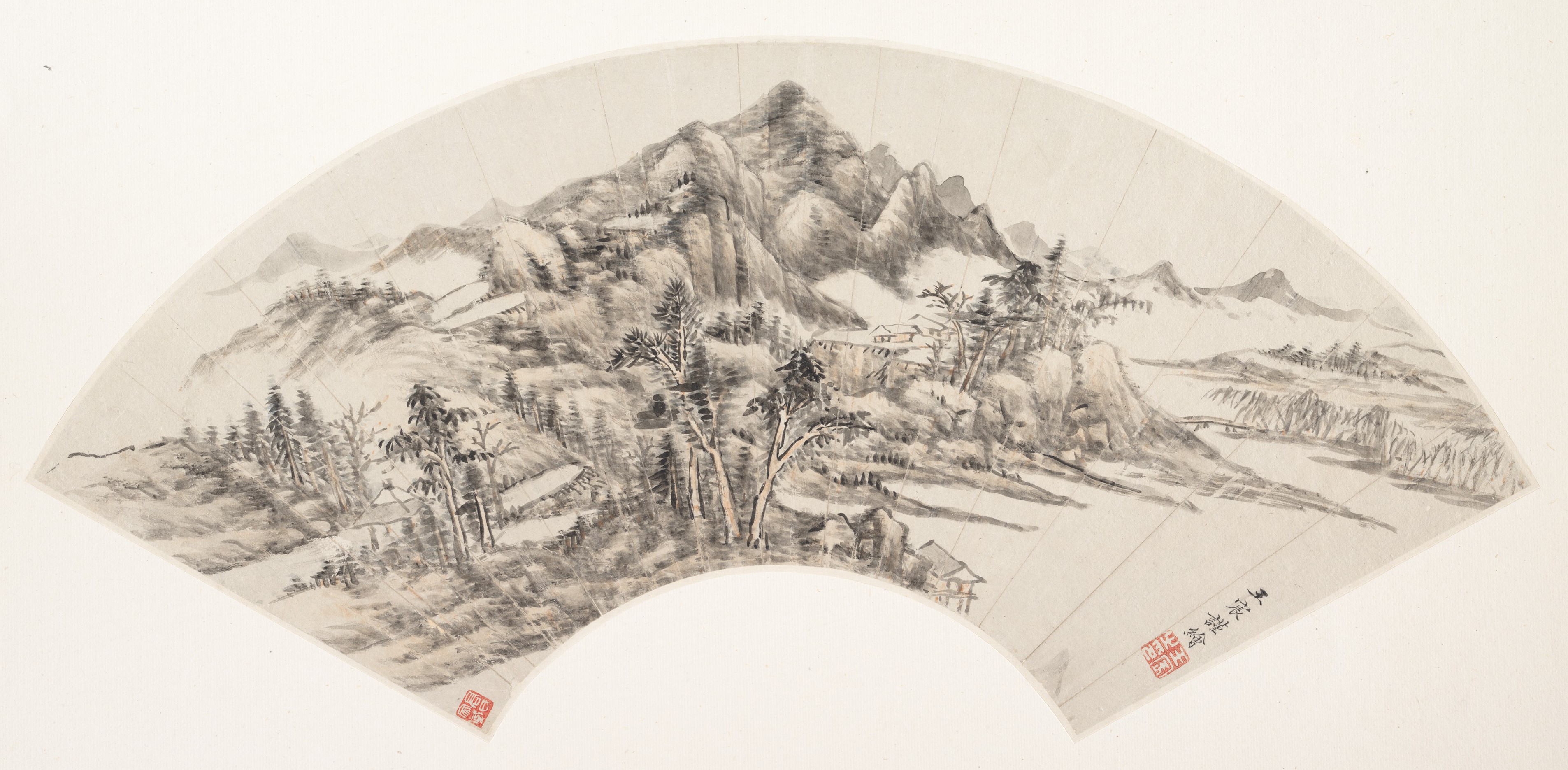
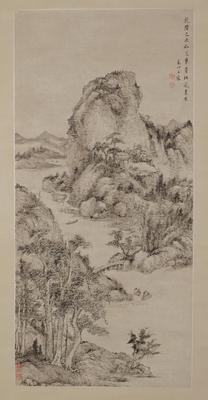
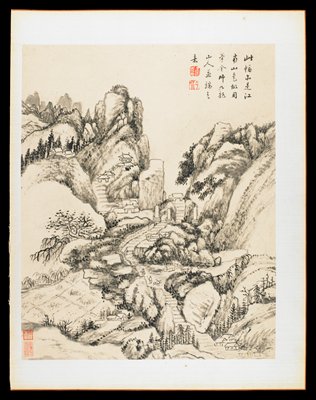
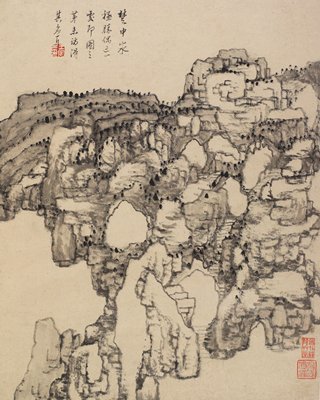
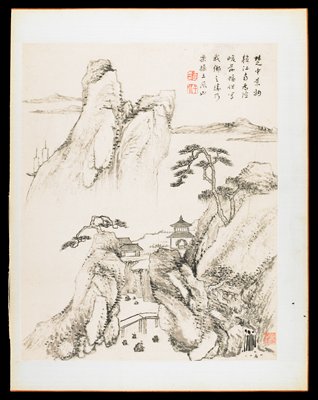
Born in Jiangsu province, Wang Chen was a descendant of the great literatus Wang Shimin and a great grandson of the artist Wang Yuanqi. He served for a while in the Grand Secretariat and as a prefect in Hunan province. Wang's illustrious family heritage strengthened his reputation as an orthodox painter and he is one of the so-called Four Minor Wangs of the later Qing. Wang's inscriptions here indicate that the basis for this album of large landscapes was the natural scenery of Chu, a Warring States (475-221 BCE) kingdom located south of the Yangzi River. In 1774, Wang was serving as a low-level official in this region. His inscriptions also mention earlier poets and painters whose conceptual and stylistic influences along with natural scenery inspired the various scenes here, which were based on sketches made at the sites themselves. The inscriptions read: 1) The landscape of Chu is extremely scenic. I came across one place and sketched it but neglected to ask its name. 2) One morning I entered the sea in search of Li Bo; looking in vain among the paintings of mere mortals for the Immortal of Ink. 3) The ceremonial burial mounds and Sichuan are neat. This is a scene of entering the gorge. 4) I have used the brushwork of Shuming (Wang Meng) to paint the style of Old Man Songxue (Zhao Mengfu). There is resemblance because they are from the same family.