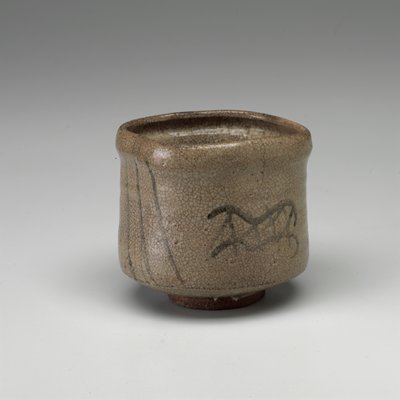
Serving dish with bridge and water
- Medium
- Karatsu ware, glazed stoneware
- Dimensions
- 3 1/2 x 3 3/4 x 3 3/4 in. (8.89 x 9.53 x 9.53 cm)
- Genre
- Ceramics
Tags
Japan
About
Japanese tea masters prized the simple, unpretentious beauty of everyday wares produced by Korean potters at the Karatsu kilns on the southernmost Japanese island of Kyushu. This small cup-shaped dish, called mukōzuke, was used to serve an appetizer of raw fish or marinated vegetables. The term mukōzuke describes their placement (zuke) on the far side (mukō) of the serving tray—away from the guest. Bowls for rice and soup were placed closer to the guest on the tray. Typical of wares from the Karatsu kilns, this mukōzuke is decorated with casual, rapidly painted designs in iron-oxide brown—in this case a simple bridge over flowing water.
![Netsuke [Gama Sennin]](https://1.api.artsmia.org/30382.jpg)

![Netsuke [Frogs on a Leaf]](https://1.api.artsmia.org/31735.jpg)