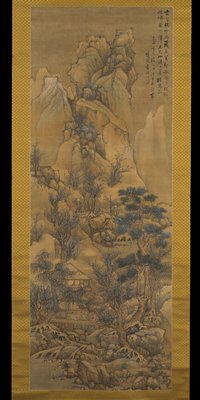
Thatched Huts Among Ridges in Winter
Lan Ying
1649
- Medium
- Ink and colors on silk
- Dimensions
- 72-1/16 x 26-13/16 in. (183.0 x 68.1 cm)
- Genre
- Paintings
Tags
China
About
The larger forms in this wintry landscape have strong silhouettes, with dramatic contrasts between light and dark surfaces. Lan Ying’s inscription indicates that he painted this scene in the manner of Wang Wei (699–759), a Tang dynasty poet and master artist associated with the beginnings of the ink landscape tradition. Wang’s poems and landscape paintings are imbued with the spirit of eremitism—the retreat from society into a life of seclusion. This spirit can be felt in Lan’s composition here: a solitary cottage on a mountain amid a grove of trees. In scenes like this, the atmospheric effects portray the concept of eremitism as a peaceful, nonreligious act of solitude within an otherworldly setting.