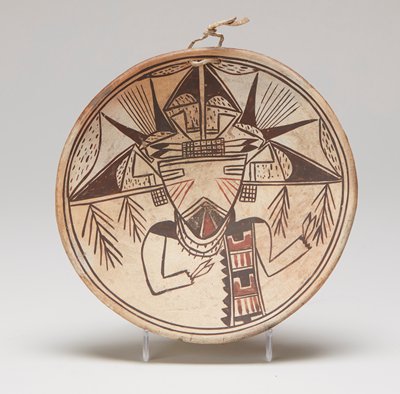
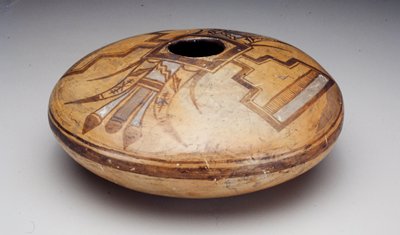
Vessel
Nampeyo
1890
- Medium
- Clay, pigments
- Genre
- Ceramics
Tags
United States
About
Towards the end of the 19th century, a Hopituh Shinumu (Hopi)-Tewa woman named Nampeyo emerged as the leader in the revival of Hopituh Shinumu pottery. Her husband, Lesso, assisted Jesse Fewkes from the Bureau of American Ethnology in excavating the ancient Hopituh Shinumu town of Sikyatki in 1895. This job gave Lesso the opportunity to study the designs on Sikyatki potsherds, many of which he diligently sketched and used as reference for the designs on Nampeyo's pots. Around 1900, Nampeyo stopped using white slip when she discovered the Sikyatki clay source and began polishing the clay itself. The white slip on this pot indicates that it is an early example of their work.