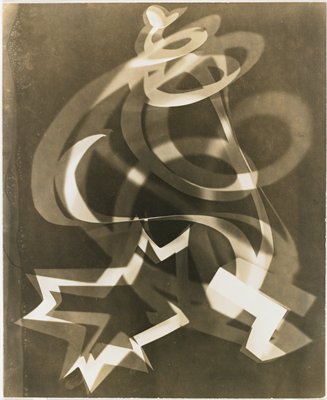
Untitled
- Medium
- Gelatin silver print
- Dimensions
- 10 7/8 x 8 7/8 in. (27.62 x 22.54 cm) (image, sheet)
- Genre
- Photographs
Tags
United States
About
László Moholy-Nagy was a leading figure of the Bauhaus, a modern art and design school founded by the architect Walter Gropius, as well as being a prominent member of the related New Objectivity Movement. Moholy-Nagy worked as a painter, graphic artist, photographer, and teacher, and he produced this image without a camera by arranging objects directly on a sheet of photo paper and exposing it to light. The resulting photogram is a negative shadow image with tonal variations. Although this process was used by photographers in the 1800s and popularized as a children’s amusement, 20th-century avant-garde artists revived it as a way to embrace abstraction and explore the optical properties of light.

![[Cover Design for the Spandau-Haselhorst Housing Development Prospectus]](https://media.getty.edu/iiif/image/d1669a90-86cc-4c66-bfc4-1ab2c116e0c9/full/843,/0/default.jpg)


![[Cover Design for Spandau-Haselhorst Housing Development Prospectus]](https://media.getty.edu/iiif/image/312740e8-19df-4e14-88b8-0fefcab911d4/full/843,/0/default.jpg)


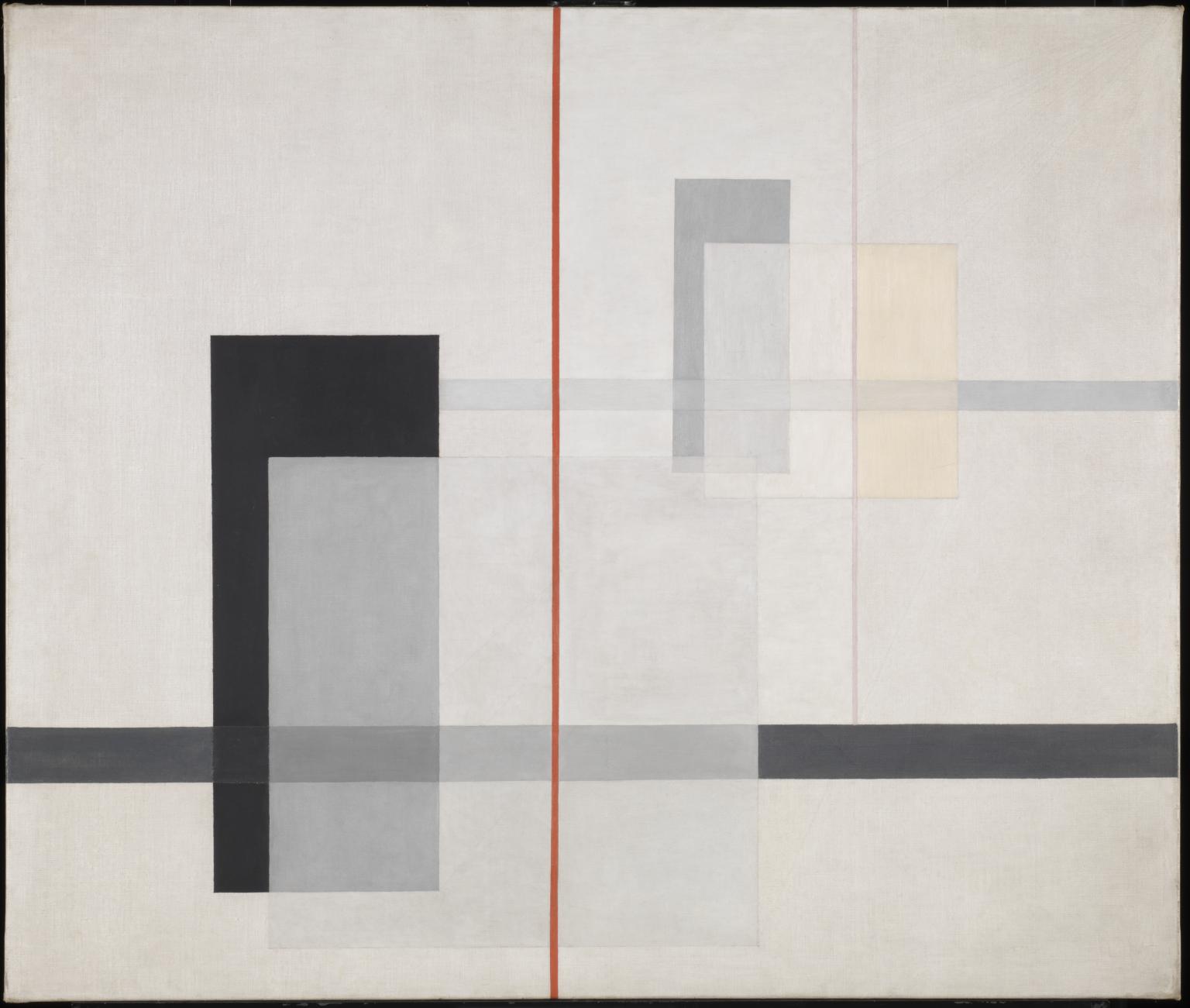
![[Design for Textile Advertisement]](https://media.getty.edu/iiif/image/a4ad862b-fa31-4e98-959b-a102bfd2bce0/full/843,/0/default.jpg)