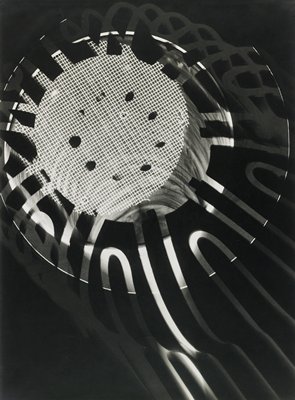
Fotogram II
- Medium
- Gelatin silver print (printed 1929)
- Dimensions
- 15 11/16 x 11 13/16 in. (39.85 x 30 cm) (image, sheet)
- Genre
- Photographs
Tags
United States
About
A photogram is a photographic image produced without the use of a camera. Objects are placed on light-sensitive paper and exposed to light, resulting in a negative shadow image with tonal variations according to the transparency of the particular objects. In Fotogram II, a strainer or colander is used to create a study of the function and effects of light. As an instructor at the Bauhaus, Moholy-Nagy (pronounced Mo-HA-lee NADGE) experimented with photographic processes in a manner consistent with the art school’s credo: Art and Technology: A New Unity.


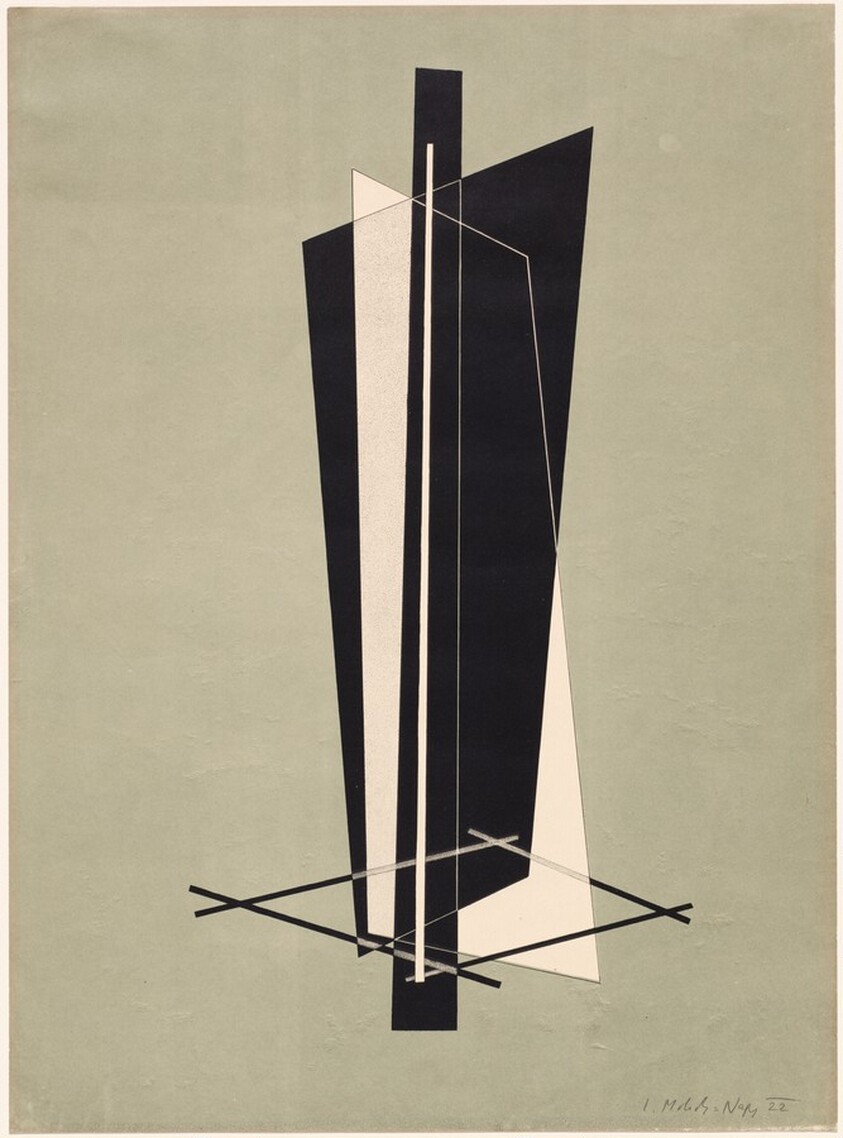

![[Design for German Construction Workers Union Pavilion]](https://media.getty.edu/iiif/image/e56bf3f5-9009-4991-bc00-79f923fc0a03/full/843,/0/default.jpg)

![[Photogram]](https://media.getty.edu/iiif/image/c0a7610f-60c7-4c1a-b0f1-46d45b1f8d0f/full/843,/0/default.jpg)
![[Installation Views of German Construction Workers Union Pavilion]](https://media.getty.edu/iiif/image/c067ea38-036e-4539-8cb2-ea88f272bcdc/full/843,/0/default.jpg)
![[German Construction Workers Union Pavilion]](https://media.getty.edu/iiif/image/b2f86e14-cd60-40b0-bb0f-8b1f370e987e/full/843,/0/default.jpg)


