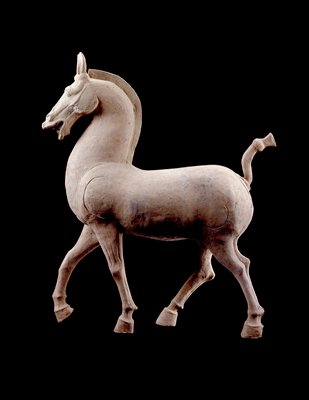
Prancing Horse
- Medium
- Earthenware with traces of pigment
- Dimensions
- 42 x 36 1/2 x 11 1/2 in. (106.68 x 92.71 x 29.21 cm)
- Genre
- Ceramics
Tags
China
About
With its lifted foreleg, arched neck, and alert expression, this prancing horse conveys energy disciplined by control. During the Han dynasty, such horses became visual shorthand for elite presence, especially in contexts of ceremony and movement. Rather than depicting labor or combat, tomb horses often evoke ordered motion—suggesting escorts, arrivals, and formal progressions tied to official life. Their refined posture and idealized form distinguish them from everyday animals. Buried with the dead, figures like this affirmed the owner’s rank and visibility, projecting an image of dignified procession that extended social identity beyond life into the realm of memory and ritual.