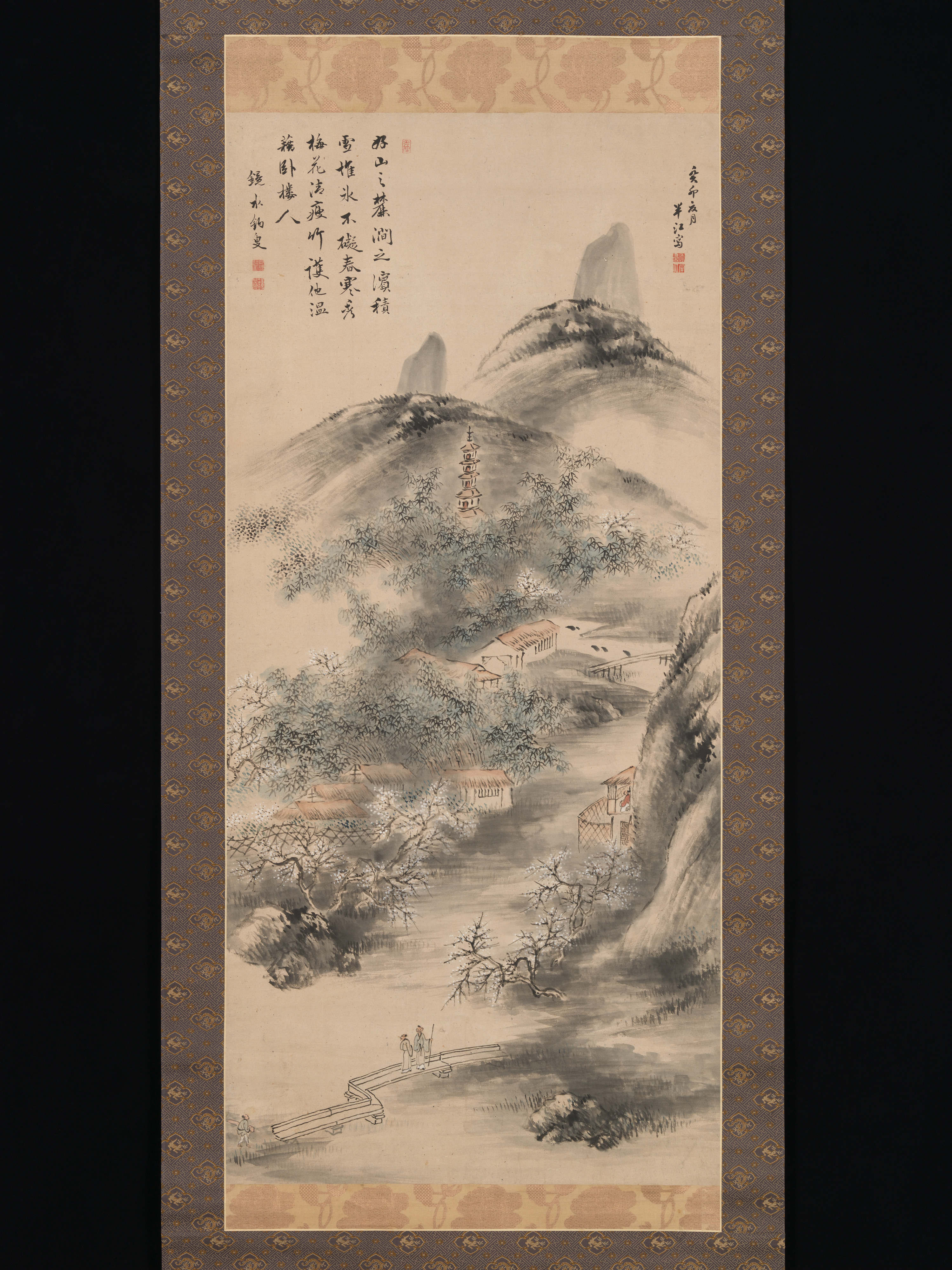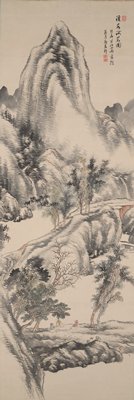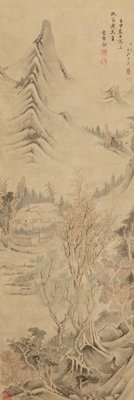
Autumn Landscape
- Medium
- Hanging scroll, ink and light color on silk
- Dimensions
- 57 1/8 x 18 5/8 in. (145.1 x 47.31 cm) (image)
Tags
Japan
About
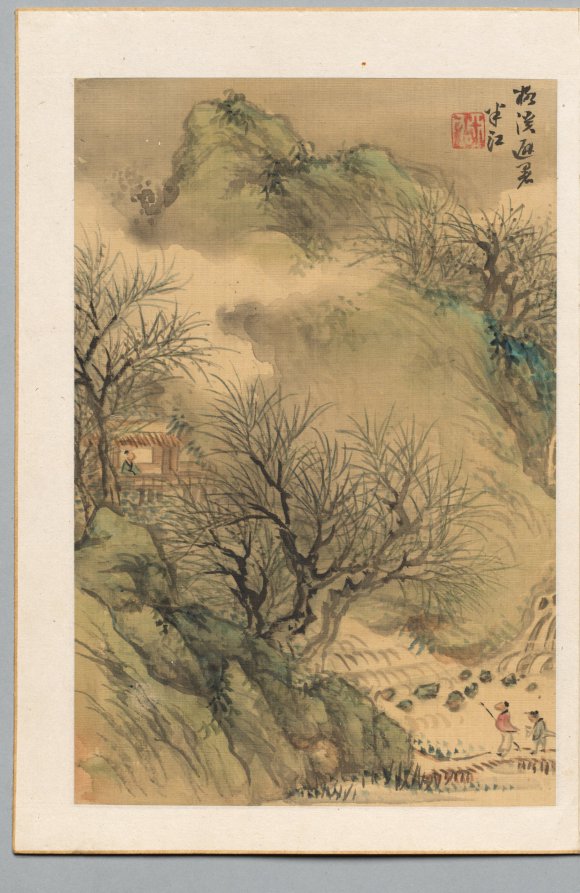
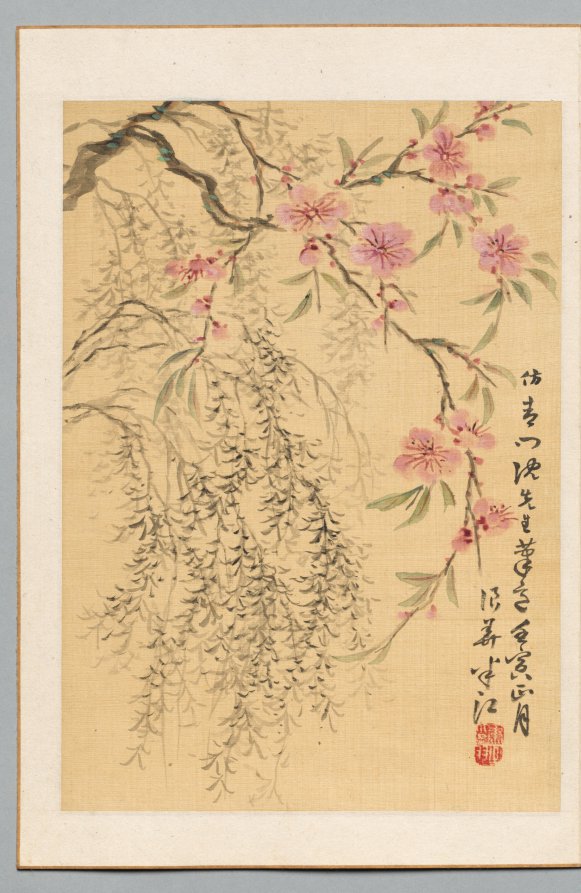
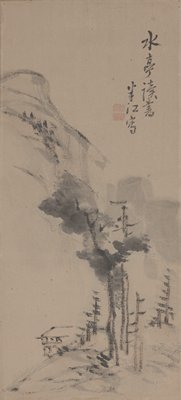
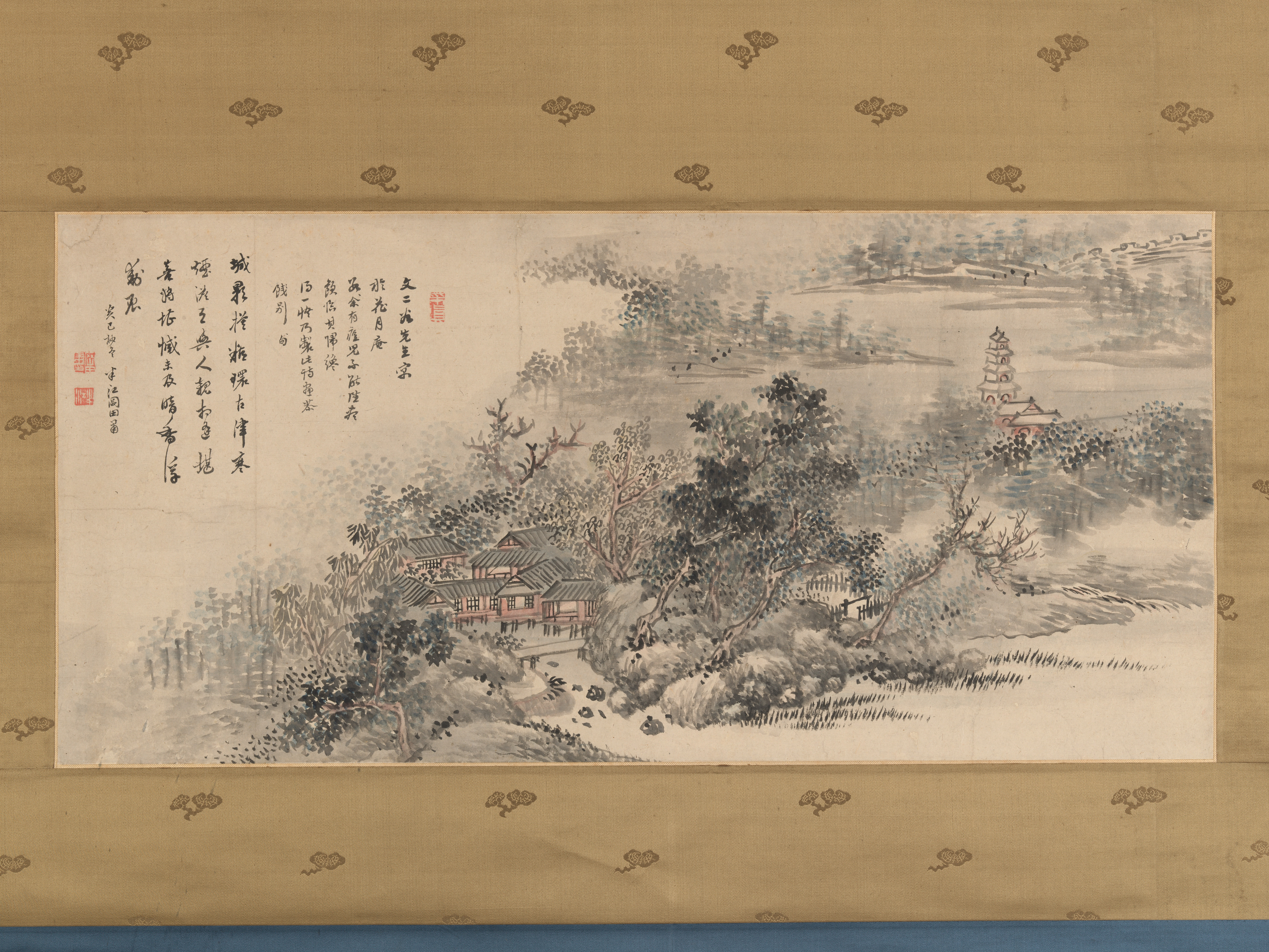
Okada Hanko_ was the son of the rice merchant and wildly eccentric painter Beisanjin. Hanko_'s own painting style, however, reflects the much more conservative approach prevalent among nanga artists active in Kyoto at the end of the nineteenth century. Greater exposure to actual Chinese paintings imported from the mainland helped these Japanese artists perfect the subtleties of their brush techniques and compositional arrangements. Hanko_'s inscription on this painting, in fact, reveals that it is a copy of a work by Dong Xiaochu, a little known artist of China's Ming dynasty.