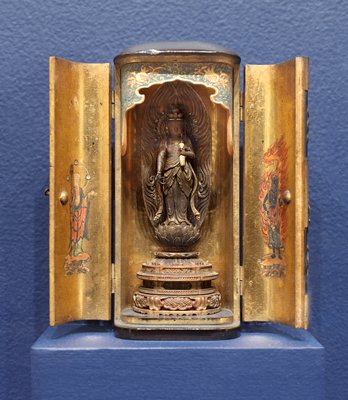
Miniature shrine (zushi)
- Medium
- Wood with pigments and gold
- Dimensions
- 6 3/8 x 2 3/4 in. (16.19 x 6.99 cm)
- Genre
- Sculpture
Tags
Japan
About
Buddhist statues in Japan frequently reside in zushi, which are wooden shrines or cabinets adorned with doors that can reveal or conceal the deity. These box-like altars represent a distinctly Japanese twist to Buddhist practice, and some scholars believe the tradition can be traced to Shinto_ shrines, where statues are rare and always concealed. Enshrined in this miniature altar is Kannon, a bodhisattva of supreme compassion, flanked by painted images of Jizo_ (Kishigarara), a deity who tries to save condemned souls, and Fudo_, a wrathful deity who slashes humankind's deluded thoughts with his sword. The small scale of this shrine indicates that it was meant to be portable, so its owner could travel in the company of his or her chosen deity.