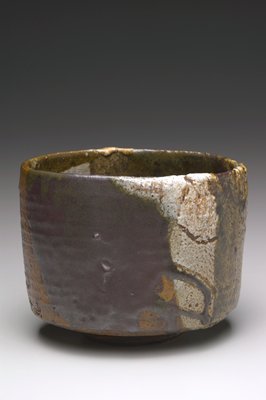
Tea bowl
- Medium
- Ko-Satsuma ware, stoneware with slip and glaze decor
- Dimensions
- 3-5/16 x 4-5/16 x 3-3/4 in. (8.4 x 11.0 x 9.5 cm)
- Genre
- Ceramics
Tags
Japan
About
Korean potters first founded the Satsuma kilns on the southern Japanese island of Kyushu in the late 1500s. Catering to the tastes of tea masters of the time, potters in Satsuma produced a variety of tea wares, most notably tea bowls and caddies. This bowl was decorated with thick irregular swathes of black and white clay slip and green glaze. Its somber tones and irregular shape accord well with the wabi (imperfect or rustic) aesthetic championed by Japan’s most renowned tea master, Sen no Rikyū (1522–1591).
![Netsuke [Sennin]](https://1.api.artsmia.org/30400.jpg)

![Netsuke [Bear with Bottle and Swollen Testicles]](https://1.api.artsmia.org/31724.jpg)
![Netsuke [boy wearing a helmet]](https://1.api.artsmia.org/30486.jpg)