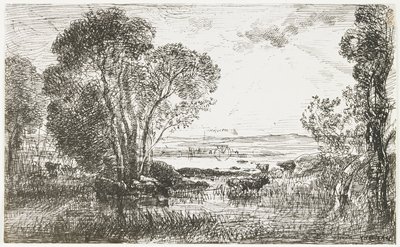
The Hydraulic Engine
- Medium
- Cliché-verre
- Dimensions
- 8 1/4 x 13 7/8 in. (20.96 x 35.24 cm) (plate) 8 1/4 x 13 1/2 in. (20.96 x 34.29 cm) (sheet)
- Genre
Tags
france
About
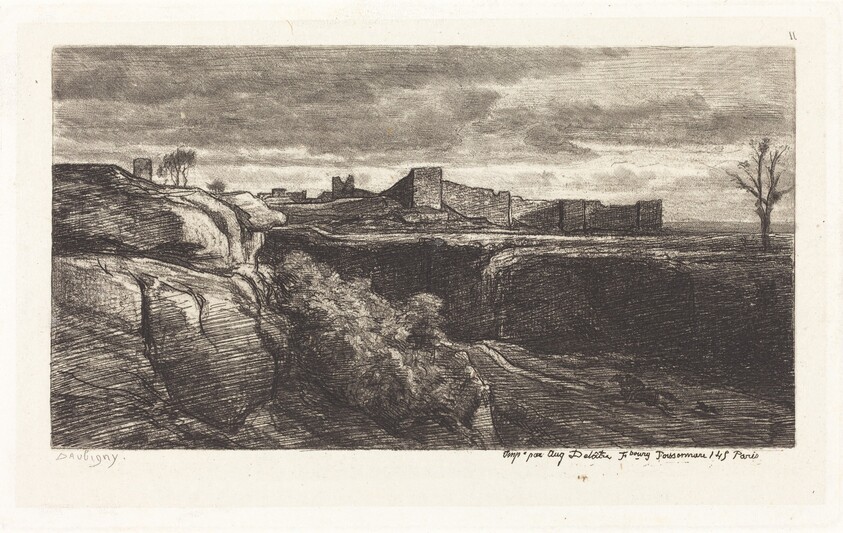
The hydraulic engine of this print's title is actually the sketchy bit of machinery in the far distance, highlighted by the sun. True to his Barbizon roots, Charles-François Daubigny spent more time on the landscape in the foreground. The work belongs to the short-lived printmaking process called cliché-verre, born in France in the 1850s. Artists would rub soot or other opaque covering on a glass plate, scratch in a design, place it on light-sensitive paper, and expose it to the sun. Because they are made much like photographs and no ink is impressed onto the paper, clichés-verre are always flat and textureless. This version of The Hydraulic Engine is an uncommon inverse print, in which Daubigny flipped the plate over and printed it the reverse of the usual way.