Death
Käthe Kollwitz
1897
- Medium
- Lithograph
- Dimensions
- 8 11/16 x 7 1/4 in. (22.07 x 18.42 cm) (image) 11 7/8 x 9 1/2 in. (30.16 x 24.13 cm) (sheet)
- Genre
Tags
Germany
About
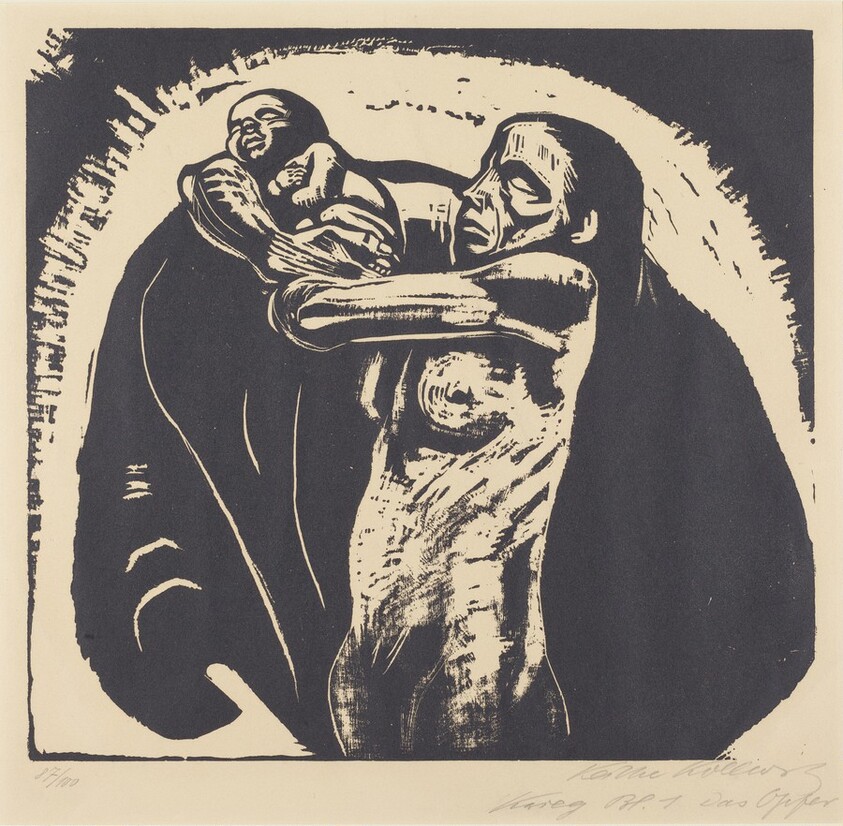
Death has made himself at home in the spare dwelling of a family of weavers in Prussian-dominated Silesia. He reaches for the exhausted woman with one hand while holding an overturned, empty bowl in the other. In the early 1840s, foreign competition and increasing population drove down the wages of textile workers. They responded with violent protests that further destabilized the economy. Despite their deepening misery, they gave inspiration to later generations of laborers seeking fair treatment. After seeing a performance of Gerhart Hauptmann's The Weavers, which dramatized the revolt, Käthe Kollwitz immediately set to work on a cycle of six prints on the plight of the Silesians.