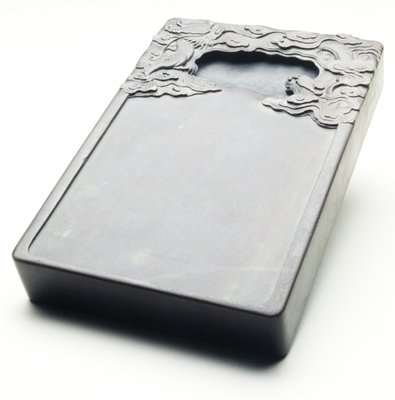
Inkstone
Chou Shao lung
1740
- Medium
- Tuan stone
- Dimensions
- 1 9/16 x 5 5/8 x 8 1/2 in. (3.97 x 14.29 x 21.59 cm)
- Genre
- Sculpture
Tags
China
About
The shape and properties of this inkstone from Duanzhou in Guangdong province derive from classical models of the late Tang and Song dynasties (10th century). A forty-two character inscription carved in official script (li shu) appears on the bottom, followed by a signature and two carved seals of Zhou Shaolong, an eighteenth-century inkstone carver. Duan inkstones became appreciated and collected by Song literary men. Some of the Tuan inkstones of both Su Shi (1036-1101) and Mi Fei (1051-1107) for instance have survived to the present day. Not until the Ming and Qing dynasties, however, did Duan inkstones become extremely high-quality scholar's objects. The most desirable were carved and inscribed with documentary verse, they soon became collector's items.